
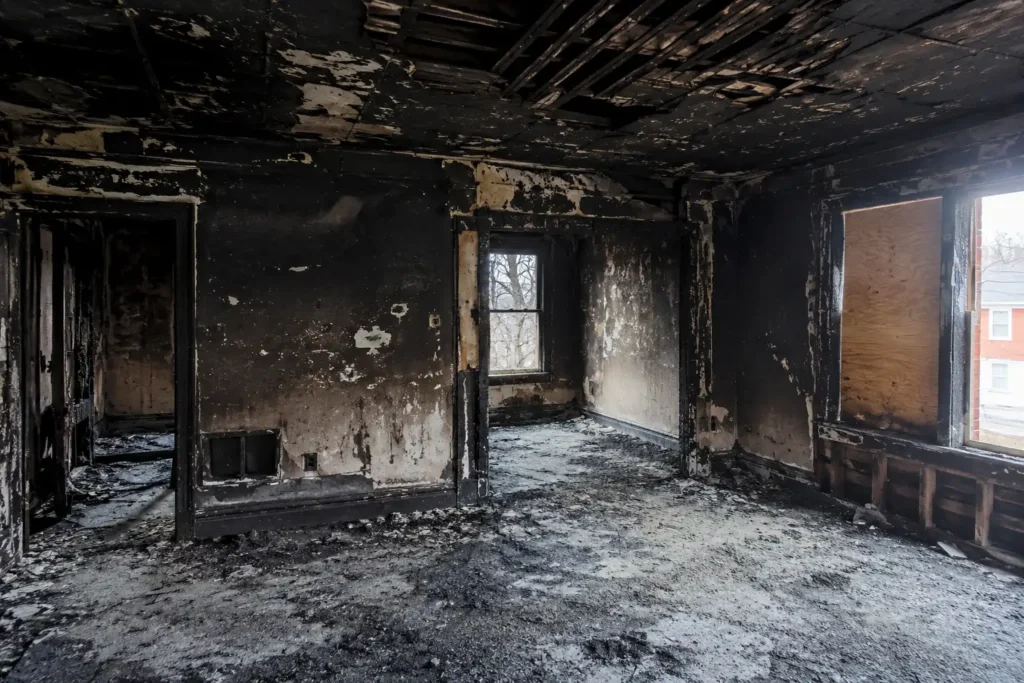
Smoke damage restoration Peoria IL homeowners need after a house fire is significantly more involved than most people expect before they go through it. The fire itself is over quickly. What it leaves behind – soot on every surface, smoke odor embedded in structural materials, and heat damage that compromised things you can’t see – takes weeks to fully address when done correctly.
This guide covers what fire and smoke actually do to a home, what a proper restoration process looks like from the first hour through final reconstruction, and why the decisions made in the first 24 hours after a fire affect the total cost and timeline of everything that follows.
What Smoke Does to a Home – Beyond What You Can See
Smoke damage is not limited to the rooms where the fire burned. Smoke travels through every opening in a structure – HVAC ducts, wall cavities, attic spaces, and around electrical penetrations – depositing soot particles on every surface it contacts. In a typical residential house fire that affects one room, smoke contamination is routinely found throughout the entire home.
The type of smoke matters too. Fires involving synthetic materials – plastics, foam furniture, carpeting – produce a wet, sticky soot that bonds aggressively to surfaces and is significantly harder to remove than the dry soot from a wood or paper fire. Protein fires from kitchen events produce a nearly invisible residue that carries an intense odor and coats surfaces in a thin film that standard cleaning doesn’t remove.
Smoke damage restoration Peoria IL jobs that involve synthetic material fires typically have a larger scope than the visible damage suggests – because the soot type dictates the cleaning method for every affected surface, and wet sticky soot requires solvent-based cleaning rather than dry chemical sponging.
The First 24 Hours After a Fire – What Needs to Happen
The first day after a fire is when the decisions that affect total restoration cost get made. Several things need to happen in parallel, not sequentially.
Emergency board-up and tarping – fire events often compromise windows, doors, and roof sections. Leaving those openings unprotected after the fire is extinguished allows weather, animals, and unauthorized entry. Emergency board-up is a same-day requirement, not something that can wait.
Ventilation – the HVAC system should not run after a fire. Running forced air through a smoke-contaminated duct system spreads soot particles to every room the system serves. Professional ventilation using negative air pressure equipment controls how smoke-laden air moves through the structure during restoration.
Soot documentation – every surface needs to be documented before any cleaning begins. Our smoke damage assessment process uses air quality sampling and surface testing to identify soot type, concentration, and affected areas across the full structure before a restoration plan is developed. This documentation is also what insurance adjusters need to process fire damage claims accurately.
Content inventory – belongings that can be salvaged need to be identified and removed for off-site cleaning before on-site restoration work begins. Items left in a smoke-contaminated environment absorb additional odor compounds over time, reducing the chance of successful restoration.
Soot Removal – Why It Has to Come Before Anything Else
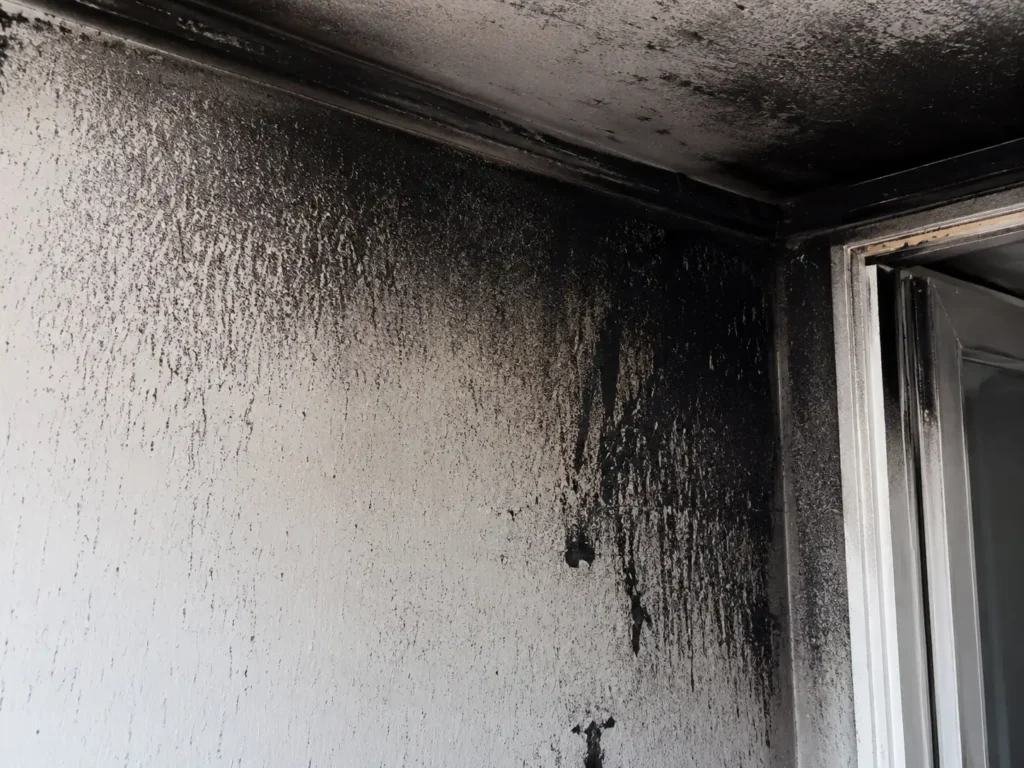
Soot is acidic – and in any smoke damage restoration Peoria IL job, soot removal has to begin before any other work, because the damage it causes is time-dependent. On contact with surfaces, it begins a chemical process that permanently etches metal, discolors paint, degrades fabric, and corrodes electronic components. The damage progression from soot is time-dependent – surfaces cleaned within 24 to 48 hours of a fire have a significantly higher rate of restoration success than the same surfaces cleaned a week later.
Our soot damage removal service uses different cleaning methods for different surface types and soot categories – dry chemical sponging for dry soot on painted walls, solvent-based cleaning for wet soot on hard surfaces, and HEPA vacuuming for loose particulate before any wet cleaning begins. Using the wrong method on a surface can permanently set the stain rather than lift it.
Porous materials – drywall, insulation, wood framing, upholstered furniture, carpeting – absorb soot particles into their structure in ways that surface cleaning can’t fully address. These materials typically require either professional content cleaning in a controlled environment or replacement, depending on the level of absorption and the type of soot involved.
Smoke Odor – The Problem That Outlasts Everything Else
Smoke odor is the most persistent consequence of a house fire and the most frequently underestimated by homeowners who are focused on the visible damage. The odor compounds from smoke – volatile organic compounds (VOCs), polycyclic aromatic hydrocarbons, and aldehydes – penetrate into structural materials at a molecular level. According to EPA guidance on indoor air quality after fire events, VOCs from smoke can persist in structural materials long after visible soot is removed – which is why surface cleaning alone never fully resolves smoke odor in a fire-damaged home. Surface cleaning removes visible soot but does not eliminate the odor compounds embedded in wall cavities, subfloor material, and ceiling assemblies.
Our smoke odor removal process uses a combination of thermal fogging, hydroxyl generation, and ozone treatment depending on the severity and type of odor present. Each method works differently – thermal fogging follows the same pathways smoke took through the structure to deposit deodorizing particles in the same spaces the odor compounds reached. Hydroxyl generation oxidizes odor molecules in the air and on surfaces without requiring the space to be vacated.
The reason smoke odor persists in homes that were “cleaned” after a fire is almost always that surface cleaning was done without addressing the structural penetration of odor compounds. A freshly painted room still smells like smoke six months later because the paint was applied over odor that’s still embedded in the drywall behind it.
Fire Water Damage – The Overlooked Restoration Category
Every significant house fire involves water damage from suppression. Fire hoses and sprinkler systems discharge large volumes of water in a short time, and that water is contaminated with fire suppression chemicals, soot, and ash – a category 3 contamination event on top of the fire damage itself.
For Peoria homeowners, smoke damage restoration Peoria IL jobs almost always include a water damage component that needs to be addressed alongside the smoke and soot cleanup. Wet insulation from suppression water needs to be removed. Structural drying needs to run concurrently with soot cleaning. Contaminated suppression water that reached basement levels needs to be extracted and the space decontaminated.
This overlap between fire, smoke, and water damage is why fire restoration jobs typically take longer and cost more than their visible scope suggests – three categories of damage are being addressed simultaneously, each with its own protocol and timeline.
Structural Fire Damage – What Gets Repaired and What Gets Replaced
Not all structural damage from a fire is visible, and not everything that’s visible is as severe as it looks. Our structural fire damage repair assessment covers every load-bearing component in the affected area to determine what’s been compromised structurally versus what’s cosmetically damaged.
Common structural outcomes after a residential fire:
- Roof sheathing and framing – direct flame contact compromises structural integrity. Charred framing that has lost more than half its cross-section depth needs replacement, not just sealing.
- Drywall – almost always replaced in fire-affected rooms. Even drywall that wasn’t directly charred has typically absorbed enough smoke and suppression water that replacement is more cost-effective than attempting to restore it.
- Flooring – hardwood flooring exposed to fire heat often shows cupping and structural damage beyond what’s visible on the surface. Subfloor integrity needs to be confirmed before any new flooring is installed.
- Electrical – heat damage to wiring insulation and junction boxes is a life-safety issue. Any electrical components in the fire zone need inspection by a licensed electrician before power is restored to affected circuits.
Peoria Heights and Surrounding Areas – Older Homes and Fire Risk
In Peoria Heights and surrounding older neighborhoods, residential fire risk has specific characteristics that affect how smoke damage restoration jobs unfold. Homes built before 1970 often have knob-and-tube or early aluminum wiring that is significantly more vulnerable to fire spread than modern wiring systems. Older plaster walls and real wood lath construction absorb soot differently from modern drywall construction.
For homeowners in Peoria Heights and similar established neighborhoods – West Central, East Bluff, Bartonville – smoke damage restoration Peoria IL jobs in older construction typically involve more material removal and more thorough odor treatment than equivalent jobs in newer suburban construction, because older materials hold smoke compounds more aggressively.
How Long Does Smoke Damage Restoration Take in Peoria IL?
A realistic smoke damage restoration Peoria IL timeline for most residential jobs looks like this:
- Day 1 – emergency board-up, ventilation setup, soot documentation, content removal begins
- Days 2 to 5 – soot cleaning across all affected surfaces, structural drying if suppression water was involved, odor treatment begins
- Days 6 to 10 – odor treatment cycles complete, air quality testing confirms results, material removal decisions finalized
- Week 2 to 3 – reconstruction planning, material sourcing, permits if structural work is required
- Week 3 to 6 – active reconstruction, drywall, flooring, painting, electrical and HVAC restoration
Jobs involving larger fire events, significant structural damage, or older Peoria construction with complex material profiles run toward the longer end of that range.
Final Thought – Smoke Damage Restoration Peoria IL Starts the Same Day
Smoke damage restoration Peoria IL response needs to start the same day as the fire event – not the next morning after the insurance company is reached. The soot clock starts immediately, and every hour of delay in beginning documentation and ventilation extends the timeline and cost of everything that follows.
For homeowners who recently experienced storm damage that progressed to fire-related events, our hail damage repair guide covers the intersection between storm and structural damage that sometimes precedes fire events in Peoria homes.
For smoke damage restoration Peoria IL response right now, call (309) 549-1827 – available 24 hours a day, seven days a week, with same-day assessment and emergency board-up across Peoria and surrounding Peoria County communities.
Leave a Reply