
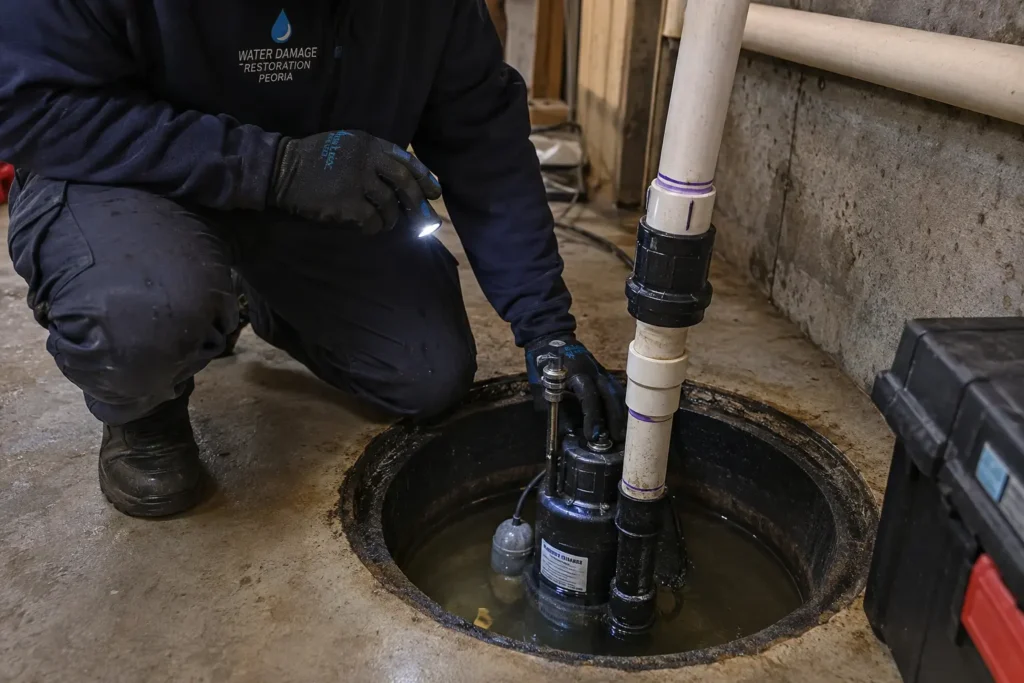
Sump pump repair Peoria IL homeowners need most often comes at the worst possible time – during a heavy spring rain when the Illinois River is rising and the basement is starting to take on water. The pump that was supposed to handle exactly this situation has stopped working, and the decision about whether to repair it or replace it needs to happen fast.
This guide covers how sump pumps fail, what the warning signs look like before complete failure, how to decide between repair and replacement, and what happens when the pump fails during an active flooding event.
Why Sump Pumps Matter More in Peoria IL Than Most Cities
Peoria’s position along the Illinois River creates groundwater pressure dynamics that don’t exist in most inland cities. During spring flooding season, March through June, rising river levels push the regional water table up across a wide area – including neighborhoods that don’t sit directly adjacent to the river.
In older Peoria neighborhoods like West Central, Bartonville, and East Bluff, where block foundation homes are common, groundwater doesn’t just threaten the perimeter of the foundation – it pressurizes the entire base of the structure. A functioning sump pump in these homes isn’t optional infrastructure. It’s the primary defense against seasonal basement flooding that happens regardless of whether it’s currently raining.
When a sump pump fails in a Peoria home during peak flooding season, the question isn’t whether the basement will flood – it’s how much water will enter before the pump gets repaired or replaced. This is why sump pump repair Peoria IL response speed matters so much more here than in regions with stable groundwater levels. This is why sump pump repair Peoria IL response needs to happen within hours, not days – every hour of delay during peak flooding season adds to the total water damage scope.
Common Sump Pump Problems – What’s Actually Going Wrong
Most sump pump repair Peoria IL calls fall into a handful of identifiable failure categories – knowing which one you’re dealing with determines whether repair is viable or replacement is the right call
Float switch failure — the float switch tells the pump when water has reached a level that requires activation. When the float gets stuck, tangled, or fails mechanically, the pump doesn’t turn on even when water is rising. This is one of the most common and most repairable sump pump problems – float switch replacement is straightforward and relatively inexpensive.
Motor failure — the motor is the heart of the pump. Motors fail from overheating, prolonged running during high-volume events, age-related wear, or electrical issues. A motor that has seized or burned out typically means the pump needs replacement, not repair, because motor rebuild costs often approach or exceed new pump costs.
Clogged discharge line — if the pipe that carries water away from the pump gets clogged with debris or freezes during winter, the pump runs continuously without actually moving water. The motor can burn out quickly in this situation. Clearing the clog resolves the immediate problem, but a motor that has been running against resistance needs to be evaluated for damage.
Power failure — the most common cause of sump pump failure during major storm events is power loss. The pump needs electricity to run at exactly the moment when a storm is knocking out power lines. This is why battery backup systems are standard in any Peoria home where basement flooding is a real seasonal risk.
Pump age — most sump pumps have a service life of 7 to 10 years under normal operating conditions. In Peoria, where pumps run more frequently and handle higher volumes than in drier climates, that lifespan often runs shorter. A pump that’s approaching or past 8 years old and showing any performance issues is a replacement candidate, not a repair candidate.
Warning Signs Before Complete Failure – What to Watch For
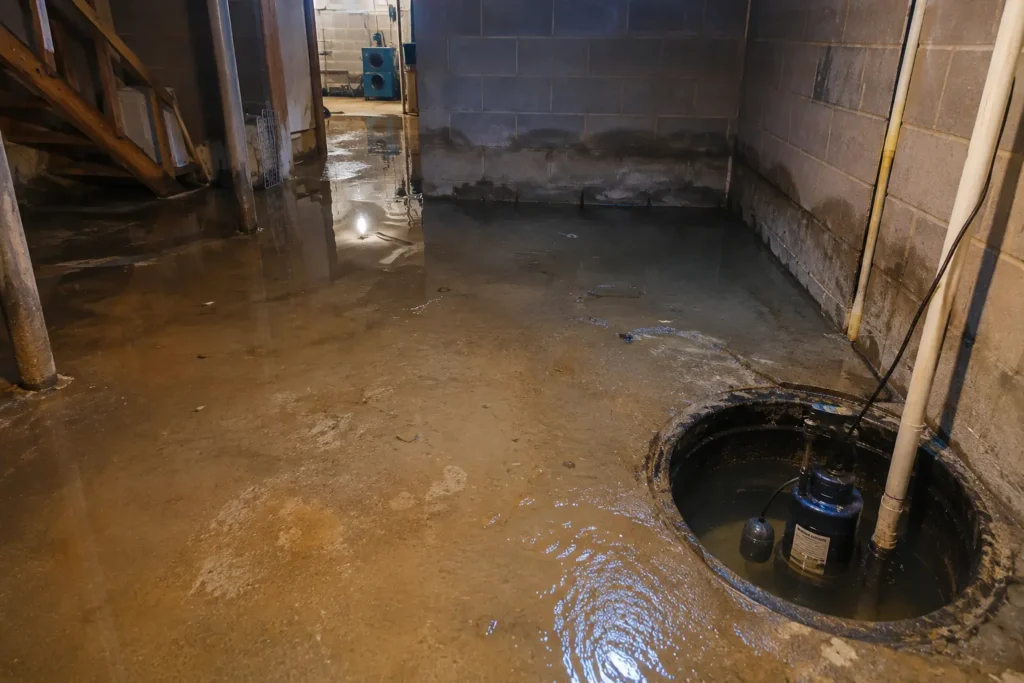
Sump pump repair Peoria IL situations that get caught before complete failure cost significantly less than emergency replacements during active flooding. These are the signals that a pump is in decline:
- Unusual noise during operation – grinding, rattling, or vibration during pump cycles indicates worn bearings, debris in the impeller, or mechanical wear that will progress to failure
- Pump runs continuously without cycling off – either the float switch is stuck in the “on” position, or the pump’s capacity has declined to the point where it can’t keep up with incoming water even at normal levels
- Pump activates but water level doesn’t drop – impeller damage, a clogged intake screen, or a worn seal can cause the pump to run without actually moving water effectively
- Visible rust or corrosion on the pump body – surface corrosion is cosmetic, but corrosion on the electrical connections or the impeller housing indicates moisture intrusion that compromises pump function
- Short cycling – the pump turns on and off rapidly in quick succession, which indicates a waterlogged air bladder in the check valve or a float that’s set too close to the pump activation point
Any of these signs in the weeks before flooding season is a reason to have the pump inspected, not to wait and see.
Fix or Replace – How to Make the Right Call
The decision between sump pump repair and replacement comes down to three factors: the nature of the failure, the age of the pump, and the cost comparison.
Repair makes sense when:
- The pump is less than 5 years old
- The failure is a single identifiable component – float switch, check valve, discharge line clog
- The repair cost is less than 50 percent of a new pump installation
- The motor is confirmed functional
Replacement makes sense when:
- The pump is 7 years or older
- The motor has failed or overheated
- The pump has had multiple repairs in the past two years
- The pump’s capacity is undersized for the home’s actual groundwater volume – a common issue in older Peoria homes where the original pump was installed before current flooding patterns were established
Our emergency sump pump installation and repair service starts with an honest assessment of whether repair addresses the root issue or just delays replacement by a season. A pump that costs $800 to repair when a reliable replacement runs $600 installed is not a repair worth making.
What Happens When the Pump Fails During Active Flooding
A sump pump failure during an active flooding event in Peoria changes the immediate priority from pump repair to water extraction. The pump can be evaluated and replaced once the basement is dry – but stopping active water intrusion and removing what’s already entered is the first-hour priority.
Water that sits in a basement during the time it takes to source a replacement pump saturates block foundation walls, subfloor material, and drywall at the base of finished walls. In Peoria’s older construction, block foundations absorb water rapidly – every hour of contact pushes moisture deeper into the material and further from the reach of surface extraction.
Our flooded basement cleanup service handles the water damage side of a sump pump failure event – commercial extraction equipment, full moisture mapping, and structural drying — while the pump replacement gets coordinated in parallel. Handling both at the same time rather than sequentially is what limits total damage scope and total restoration cost.
Battery Backup Systems – The Peoria-Specific Case for Adding One
Most Peoria homeowners who have experienced basement flooding during a storm have experienced it during a power outage. The two events are directly correlated — the same storm that raises the water table and overwhelms drainage systems also takes out power to the neighborhoods most at risk of flooding.
A battery backup sump pump runs independently of grid power and activates automatically when the primary pump fails or loses power. According to FEMA flood preparedness resources, homes in designated flood zones should have redundant pump systems – and much of Peoria County qualifies as a flood-risk area. In Peoria’s flooding season context, a battery backup isn’t a luxury add-on – it’s the component that determines whether a power outage during an Illinois River surge event means “the backup handled it” or “we had four inches of water in the basement.”
Battery backup systems should be tested at least annually and have their batteries replaced every 3 to 5 years, regardless of whether they’ve been activated. A backup with a dead battery provides no protection at all.
Sump Pump Maintenance – What Prevents Most Failures
Most sump pump failures in Peoria homes are preventable with basic annual maintenance that most homeowners skip because the pump is out of sight and out of mind until it fails.
Annual maintenance checklist:
- Pour water into the pit to confirm the float activates the pump and the pump cycles correctly
- Check the discharge line at the exterior termination point for obstructions, ice during winter, or critter nests
- Clean the intake screen on the bottom of the pump of any debris or sediment
- Test the backup battery if a battery backup system is installed
- Confirm the check valve is functioning – a failed check valve allows discharged water to flow back into the pit and causes short cycling
For homeowners in Bartonville and surrounding Illinois River area communities, where pumps run more frequently and handle higher volumes than in other regions, annual maintenance should happen in February or early March – before flooding season begins, not after the first heavy rain of spring.
Sump Pump Failure and Mold – The Secondary Problem
A sump pump repair Peoria IL job that fixes the pump doesn’t fix the water damage already inside the basement – that secondary problem requires separate professional attention. Water that entered the basement during the failure event has saturated materials that need professional drying to prevent mold growth — and the mold clock starts within 24 to 48 hours of water contact on organic materials.
A repaired or replaced pump stops future water entry. It does nothing for the moisture that’s already inside the wall cavities, insulation, and subfloor from the flooding event. For homeowners who had a pump failure during Peoria’s spring flooding season and are now noticing musty odors or visible staining at the base of basement walls, our mold remediation guide covers what that timeline looks like and what professional remediation involves.
Final Thought – Sump Pump Repair Peoria IL Needs to Happen Before Flooding Season
Sump pump repair Peoria IL timing is everything. A pump that’s showing warning signs in January or February can be evaluated, repaired or replaced, and tested before the Illinois River flooding season peak in April and May. The same pump that fails during a March storm event means basement flooding, water damage restoration costs, and a rushed emergency replacement – all at the same time.
For sump pump repair Peoria IL response right now, call (309) 549-1827 – available 24 hours a day, seven days a week, with same-day assessment and emergency pump replacement across Peoria and surrounding Peoria County communities.
Leave a Reply