
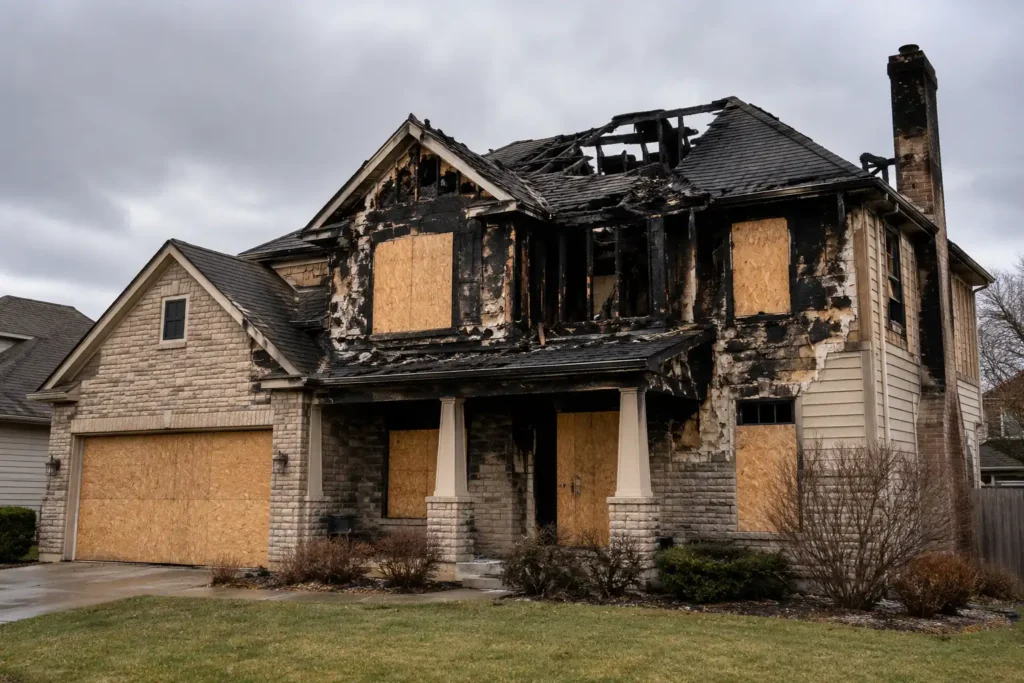
Fire damage restoration Peoria IL homeowners need after a house fire is the most complex and emotionally difficult restoration category there is. The fire itself is over in hours. What it leaves behind – structural damage, smoke penetration through every room, water from fire suppression, and the complete disruption of normal life – can take weeks or months to fully address when the process is handled correctly.
This guide covers what fire damage restoration actually involves from the moment the fire is out, what the correct sequence of steps looks like, and why what happens in the first 24 hours after a fire matters more than most homeowners realize.
Fire Damage Is Never Just One Type of Damage
Fire damage restoration Peoria IL jobs almost always involve multiple simultaneous damage categories – and each requires a completely different response protocol.
Structural damage – direct flame contact and extreme heat compromise the structural integrity of roof framing, load-bearing walls, floor systems, and connections that may not show obvious visible damage from the exterior.
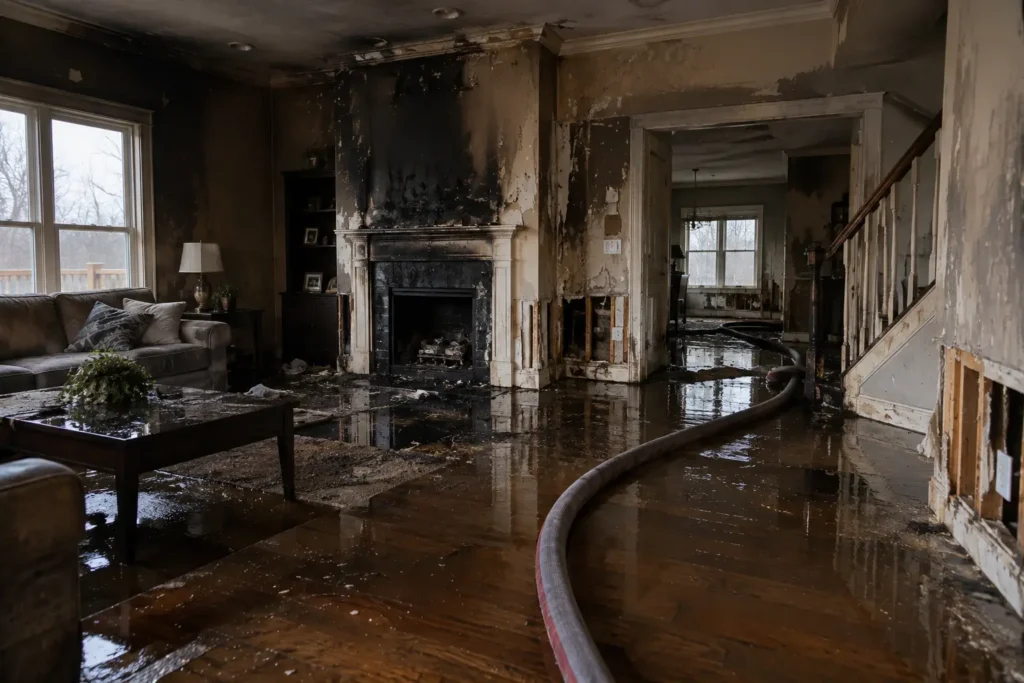
Smoke and soot damage – smoke travels through every opening in a structure, depositing soot particles on every surface it reaches, including rooms that never saw direct flame. Soot is acidic and begins etching metal, glass, and painted surfaces within hours of deposition.
Water damage from suppression – every significant house fire involves fire hose water or sprinkler system discharge. That water is contaminated with fire suppression chemicals, soot, and ash – a category 3 water event on top of the fire damage itself.
Odor and air quality damage – smoke compounds penetrate into structural materials at a molecular level. The volatile organic compounds (VOCs) released by burning building materials and contents create air quality issues that persist long after the visible smoke is gone.
Fire damage restoration Peoria IL jobs address all four of these categories simultaneously, not sequentially. Understanding this is what sets realistic expectations about timeline and total scope.
The First 24 Hours After a Fire – What Needs to Happen and Why
Fire damage restoration Peoria IL response starts the same day as the fire – not after the insurance company is reached, not after the weekend, and not after you’ve had time to process what happened. Several things that need to happen in the first 24 hours directly affect how much total damage the property sustains. Every fire damage restoration Peoria IL job that starts within the first few hours consistently results in a smaller total scope than the same job that starts the next morning.
Safety Confirmation Before Entering
Do not enter a fire-damaged home until the fire department has cleared it for entry and utilities have been confirmed off. Structural members compromised by fire can fail hours after the event. Gas lines damaged by heat create explosion risk. Electrical panels and wiring exposed to fire and water create electrocution hazards that aren’t visible on approach.
Emergency Board-Up and Tarping
Any breach in the building envelope – burned-through roof sections, broken windows, compromised walls – needs to be sealed against additional weather exposure the same day. Our emergency board-up service deploys same-day for fire events across Peoria County because every hour a compromised roof section sits open during rain turns a fire damage job into a combined fire and water damage job with a significantly larger scope. This single step is what separates a contained fire damage restoration Peoria IL job from one that compounds into combined fire, water, and mold damage.
Documentation Before Any Cleanup
Photograph and video every affected area – inside and outside – before any debris is moved, any water is extracted, or any items are removed. Insurance adjusters process fire damage claims based on pre-cleanup documentation. Starting cleanup before this step creates disputes that delay settlements.
Fire Damage Assessment
Our emergency fire damage assessment starts with a full structural evaluation of every affected component before any restoration plan is developed. This assessment identifies what’s structurally sound versus what needs replacement, maps the extent of smoke and soot penetration throughout the structure, and establishes the scope of fire hose water damage that needs to be addressed alongside the structural work.
Fire Hose Water – The Hidden Damage Category Most Homeowners Don’t Expect
The water damage component is one of the most consistently underestimated parts of any fire damage restoration Peoria IL job and it starts causing secondary damage before the fire is fully extinguished. Fire hoses and sprinkler systems discharge significant volumes of water during suppression – and that water doesn’t stop damaging the structure when the fire is out.
Fire suppression water is contaminated with soot, ash, fire suppression chemicals, and in many cases sewage overflow from fixtures that were compromised during the fire. It saturates ceiling assemblies, travels down wall cavities, and pools on floors while the structure is still hot. By the time a restoration team arrives, that water has often been sitting for 6 to 12 hours in a warm environment – the ideal conditions for mold establishment on wet structural materials.
Our fire hose water damage cleanup service addresses this contaminated water separately from the structural fire damage, because the protocols for category 3 water extraction and decontamination differ from standard water damage cleanup. Material that contacted fire suppression water gets treated as contaminated regardless of visible appearance – the same standard applied to sewage backup situations.
The Fire Damage Restoration Process – Phase by Phase
Fire damage restoration Peoria IL professional process follows a structured sequence. Understanding each phase helps homeowners know what’s happening and why it takes the time it does:
Phase 1 – Emergency stabilization (Days 1 to 2)
Board-up, tarping, utility disconnection, and assessment. The goal is stopping additional damage before evaluation begins. No restoration work starts until the structure is confirmed safe and documented.
Phase 2 – Water extraction and structural drying (Days 1 to 7)
Fire suppression water gets extracted using commercial equipment. Structural drying begins immediately after extraction, running concurrently with other Phase 2 work. In Peoria’s humid climate, drying timelines run longer than in drier regions – expect 5 to 10 days for complete structural drying depending on volume and materials.
Phase 3 – Debris removal and charred material removal (Days 2 to 7)
Charred structural materials, fire-damaged contents, and hazardous debris get removed and disposed of according to Illinois environmental regulations. This phase often reveals additional structural damage that wasn’t visible before debris clearing began.
Phase 4 – Smoke and soot cleaning (Days 3 to 10)
Every surface in the affected area – and in many cases throughout the entire structure – gets evaluated for soot type and cleaned using the appropriate method. Dry chemical sponging for dry soot. Solvent-based cleaning for wet sticky soot from synthetic materials. HEPA vacuuming before any wet cleaning begins to prevent soot from being ground into surfaces.
Phase 5 – Odor treatment (Days 7 to 14)
Thermal fogging, hydroxyl generation, and ozone treatment address smoke odor compounds embedded in structural materials. This phase can’t begin until soot cleaning is complete – applying odor treatment over soot-contaminated surfaces reduces effectiveness significantly.
Phase 6 – Structural repair (Weeks 2 to 4+)
Our structural fire damage repair process begins after the structure is confirmed dry, soot-free, and deodorized. Replacing fire-damaged framing, roof sheathing, floor systems, and structural connections happens before any finish work begins.
Phase 7 – Reconstruction (Weeks 3 to 8+)
Drywall, insulation, flooring, painting, electrical, HVAC, and plumbing restoration returns the home to its pre-loss condition. Timeline depends heavily on the scope of structural damage and the permit requirements for the specific repairs involved.
This phase of fire damage restoration Peoria IL work often reveals hidden structural compromise that wasn’t visible before debris was cleared.
Smoke and Soot – What’s Happening in the Rooms That Didn’t Burn
One of the most important things to understand about fire damage restoration is that the rooms where the fire didn’t burn often require as much attention as the rooms that did.
Smoke travels through HVAC ductwork, around electrical penetrations, through attic spaces, and under door gaps – depositing soot particles on every surface it reaches. In a typical single-room house fire in Peoria, smoke contamination is routinely found throughout the entire structure. Upholstered furniture in rooms three rooms away from the fire may carry soot levels requiring professional cleaning. Ductwork throughout the home carries smoke residue that will continue circulating through the house every time the HVAC system runs until it’s professionally cleaned.
For a full breakdown of what smoke damage involves and how different soot types require different cleaning methods, our smoke damage restoration guide covers the smoke and odor components in detail. The fire damage restoration process and the smoke damage restoration process run together – they’re not two separate jobs.
Fire damage restoration Peoria IL and smoke damage restoration are not two separate jobs – they run together as one integrated process from day one.
Your Belongings After a Fire – What Can Be Saved
The question homeowners ask most urgently after a fire is what can be saved from inside the home. The answer is more than most people expect – but only if the pack-out and assessment process starts quickly.
Soot is acidic and begins permanently damaging surfaces within hours of deposition. Belongings left in a smoke-contaminated environment continue absorbing odor compounds the longer they remain. Items that appear to be total losses are often fully restorable when professional cleaning begins within the first day or two.
Our contents restoration guide covers the full picture of what professional restoration can salvage from a fire event – including electronics, documents, photographs, furniture, and clothing – and what the pack-out and assessment process involves.
Fire Damage and Insurance – What Illinois Homeowners Need to Know
Standard Illinois homeowner’s insurance covers fire damage as a named peril under dwelling coverage. What matters practically is timing, documentation, and understanding how the claim process works alongside restoration.
Notify your insurer the same day – most policies have notification windows after a loss event, and missing that window can complicate the claim even when the damage is clearly covered.
Emergency mitigation is covered separately – board-up, tarping, and emergency water extraction are typically covered as emergency mitigation costs under most Illinois policies, separate from the main reconstruction claim. Documenting these costs and getting them to your adjuster quickly is important.
Contents claims require inventory – the contents portion of a fire claim is processed based on an itemized inventory of damaged belongings with documentation of pre-loss value. Professional pack-out documentation during the restoration process creates this inventory as a standard deliverable – attempting to reconstruct it from memory after the fact consistently results in lower settlements.
According to the Illinois Department of Insurance, homeowners have the right to choose their own restoration contractor for fire damage work. You are not obligated to use a company referred by your insurance carrier, and your insurer cannot refuse to pay a legitimate claim because you chose a different contractor. According to U.S. Fire Administration guidance on residential fire recovery, the documentation steps taken in the first 24 hours after a fire have the greatest impact on how smoothly the insurance and restoration process proceeds.
Older Peoria Homes and Fire Damage – What Makes the Restoration More Complex
Fire damage restoration Peoria IL jobs in older neighborhoods like Peoria Heights, West Central, and East Bluff involve specific complexity that newer construction simply doesn’t present.
Homes built before 1980 in these neighborhoods often contain materials that require specialized handling during restoration – asbestos-containing ceiling tiles, floor adhesives, and insulation materials that were standard construction practice before the 1980s. When fire damage requires removal of these materials, Illinois environmental regulations require proper testing and disposal protocols before any standard demolition or debris removal work begins.
Pre-1980s knob-and-tube and early aluminum wiring, which is still present in many Peoria Heights and West Central homes, creates additional electrical assessment requirements after a fire. Heat damage to older wiring insulation may not be visible but creates fire risk if affected circuits are restored to service without full inspection.
Older plaster and lath construction, common in Peoria homes built before 1950, absorbs smoke and soot differently than modern drywall construction – requiring different cleaning approaches and in many cases complete removal and replacement where modern drywall would be cleaned in place.
How Long Does Fire Damage Restoration Take in Peoria IL?
The fire damage restoration Peoria IL timeline depends significantly on the scope of the fire, the age and construction of the home, and how quickly the restoration process started. The age and construction of the home, and how quickly the restoration process started.
General frameworks for most Peoria residential fire damage jobs:
- Small contained fire – kitchen fire, single room affected, caught quickly: 3 to 6 weeks from event to completed reconstruction
- Moderate fire – multiple rooms affected, significant smoke damage throughout the structure: 6 to 10 weeks
- Major fire – substantial structural damage, whole-level or whole-structure involvement: 12 to 20+ weeks, depending on permit requirements and structural complexity
Permit timelines through the City of Peoria Building Department affect reconstruction schedules, particularly for jobs involving structural repairs, electrical work, or plumbing replacement – all of which require permits and inspections before work can proceed and before the space can be re-occupied.
Final Thought – Fire Damage Restoration Peoria IL Starts With One Call
Fire damage restoration Peoria IL done right is a structured, documented process that moves through specific phases in a specific sequence. Skipping phases, rushing timelines, or starting reconstruction before smoke, soot, and water damage are fully addressed is what leads to persistent odors, recurring mold, and structural problems that appear months after the fire.
If your home has experienced a fire, the first call should be to a restoration company, not to start cleanup. The restoration team establishes the documentation, stabilization, and assessment that everything else depends on.
For fire damage restoration Peoria IL response right now, call (309) 549-1827 – available 24 hours a day, seven days a week, with same-day emergency stabilization, board-up, and assessment across Peoria and surrounding Peoria County communities.
FAQ Section
Q1: Can I re-enter my home after a fire to get my belongings?
Not until the fire department has formally cleared the structure for entry and confirmed utilities are off. Even after clearance, structural instability, electrical hazards, and air quality from smoke and soot make entry without protective equipment a health risk. A restoration professional can identify safe re-entry conditions during the initial assessment.
Q2: How long does fire damage restoration take in Peoria IL?
Most residential fire damage restoration jobs in Peoria run 3 to 20 weeks depending on the fire scope, structural damage, and permit requirements. Small contained fires can complete in 3 to 6 weeks. Major structural fires involving whole-level damage run 12 weeks or longer. Your restoration company should provide a documented timeline after the initial assessment.
Q3: Does homeowner’s insurance cover fire damage restoration in Illinois?
Standard Illinois homeowner’s insurance covers fire damage as a named peril. Coverage includes structural repair, contents replacement up to policy limits, and emergency mitigation costs. What isn’t covered varies by policy – reading your declarations page and contacting your insurer the same day as the fire is the right first step.
Q4: What’s the difference between fire damage restoration and smoke damage restoration?
Fire damage restoration is the full scope – structural assessment, board-up, debris removal, water extraction from suppression, structural drying, smoke and soot cleaning, odor treatment, and reconstruction. Smoke damage restoration is a component of that process, specifically focused on soot cleaning, odor treatment, and smoke ventilation. Every fire damage restoration Peoria IL job includes smoke damage restoration as an integrated part of the scope – they cannot be separated.
Q5: Does the smoke smell ever fully go away after a house fire?
Yes – when professional odor treatment methods are applied correctly to the right materials. Thermal fogging, hydroxyl generation, and ozone treatment address odor compounds embedded in structural materials. The smell that persists in homes after “restoration” is almost always the result of odor treatment being applied before soot cleaning was complete, or before wet materials were fully dried.
Q6: Can I stay in my home during fire damage restoration?
In most cases, no – not during the active restoration phases. Air quality from soot and smoke compounds, structural instability in affected areas, and the presence of industrial drying and cleaning equipment make occupancy during restoration inadvisable. Your insurer may cover temporary housing costs under your Additional Living Expenses (ALE) coverage during the restoration period.
Leave a Reply