
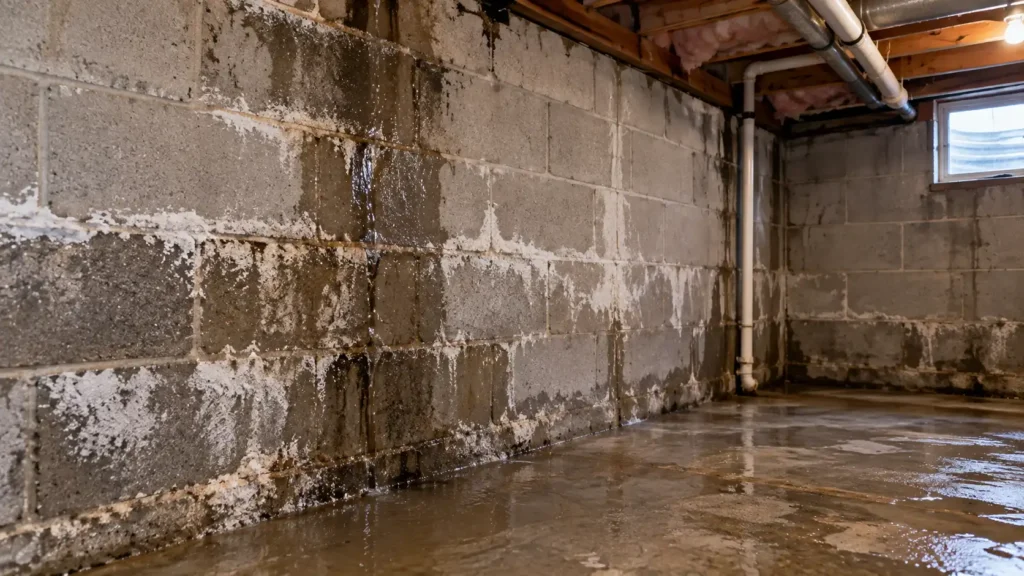
Basement waterproofing Peoria IL homeowners need is not a one-size-fits-all service – and that’s the first thing worth understanding before you start calling contractors. The right waterproofing approach for your home depends on where the water is coming from, what your foundation type is, and whether you’re dealing with a chronic problem or the result of a single event.
Peoria has specific conditions that make basement water intrusion more common here than in drier inland cities – and those same conditions affect which waterproofing methods actually work long-term versus which ones provide temporary relief. This guide covers what those conditions are, how water actually gets into Peoria basements, and what each waterproofing method can and can’t do.
Why Peoria IL Basements Are Particularly Vulnerable to Water Intrusion
Before any waterproofing discussion makes sense, it helps to understand why Peoria basements face higher water intrusion risk than most regions.
Illinois River influence – Peoria sits directly along the Illinois River, and seasonal flooding from March through June pushes the regional water table up across a wide area – including neighborhoods that don’t sit adjacent to the river. When the water table rises, it creates hydrostatic pressure against basement foundation walls and floor slabs that can force water through any available path.
Clay-heavy soil – Peoria County’s soil composition is dominated by expansive clay that holds water rather than draining it away. After a heavy rain event, this clay-heavy soil stays saturated for extended periods, maintaining moisture pressure against foundation walls long after the rain stops.
Block foundation construction – a large portion of Peoria’s residential housing stock, particularly in established neighborhoods like West Central, East Bluff, Bartonville, and Center Bluff, was built between the 1940s and 1970s using concrete block foundations. Block is porous and absorbs moisture readily, and the mortar joints between blocks degrade over decades, creating water pathways that didn’t exist when the home was built.
Freeze-thaw cycles – Peoria winters create repeated freeze-thaw cycles that widen existing foundation cracks over time. A hairline crack that wasn’t a problem in year one becomes an active water pathway by year ten after repeated expansion and contraction from seasonal temperature changes.
These factors combine to make basement water intrusion a recurring reality for many Peoria homeowners – not a one-time event to be fixed and forgotten.
How Water Actually Gets Into a Peoria Basement
Basement waterproofing Peoria IL solutions only work when they address the actual entry point. Water enters basements through several distinct pathways, and different methods address different paths.
Through block or concrete foundation walls – hydrostatic pressure from saturated soil pushes water through the porous block material itself, through degraded mortar joints, and through cracks that have developed from settling or freeze-thaw cycles. In Peoria’s older block-foundation homes, wall seepage is the most common entry point.
Through the cove joint – the cove joint is where the basement floor meets the foundation wall. It’s a natural weak point in any poured concrete or block foundation because the floor slab and the wall were poured at different times, creating a cold joint that water under pressure can exploit.
Through floor cracks – hydrostatic pressure from below the slab can force water up through cracks in the basement floor, particularly during periods when the water table is elevated from Illinois River flooding or sustained heavy rainfall.
Through window wells – basement windows with inadequate or failed window well drains collect water during heavy rain events and allow it to seep in around the window frame.
Through wall-floor interface settlement cracks – as foundations settle over decades, cracks develop at predictable stress points – corners, below window openings, and along horizontal mortar joints in block foundations. These settlement cracks are entry points that worsen with each freeze-thaw cycle.
Identifying which of these pathways is active in your specific basement is the starting point for any effective waterproofing approach.
Interior vs Exterior Basement Waterproofing – What Each Actually Does
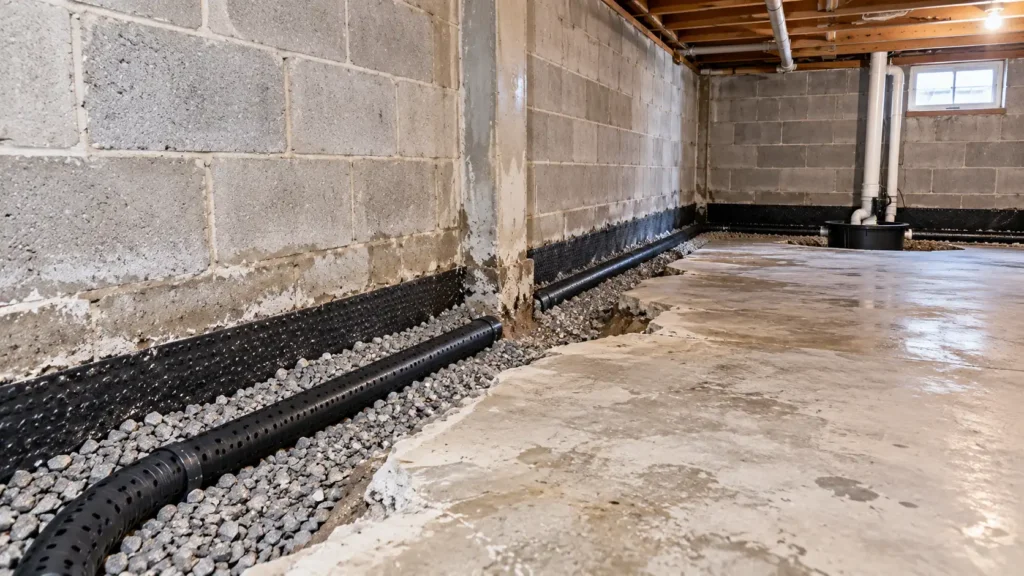
Basement waterproofing Peoria IL homeowners research most often comes down to a choice between interior and exterior approaches. The distinction matters because they work fundamentally differently.
Exterior Waterproofing – Stopping Water Before It Reaches the Foundation
Exterior waterproofing addresses the problem at its source – the exterior face of the foundation wall, before water penetrates the structure. It involves excavating around the perimeter of the home to expose the foundation walls, applying a waterproofing membrane or coating to the exterior face, installing a drainage board to direct water downward, and placing a perforated drain pipe at the base of the foundation to carry water away from the structure.
What it does well: Exterior waterproofing is the most comprehensive solution because it stops water before it contacts the foundation. It also allows for repair of exterior cracks and failed waterproofing membranes that were applied during original construction.
What it doesn’t do: Exterior waterproofing doesn’t address hydrostatic pressure from below the slab, and it doesn’t help once water has already entered through the cove joint or floor cracks.
Peoria consideration: Exterior waterproofing requires full perimeter excavation – a significant undertaking for homes with mature landscaping, attached structures, or limited yard access. It’s the right solution when exterior foundation deterioration is the primary water source, but it’s not always the practical choice for every Peoria home.
Interior Waterproofing – Managing Water That Enters the Foundation
Interior waterproofing doesn’t stop water from entering the foundation – it intercepts water that does enter and redirects it to a sump system before it can spread across the basement floor. The core component is an interior drain tile system: a perforated pipe installed in a gravel-filled trench around the perimeter of the basement floor, below the slab level, that collects water coming through the walls and cove joint and channels it to a sump pit.
What it does well: Interior drain tile is highly effective at managing water that enters through walls and the cove joint – the most common entry points in Peoria’s block-foundation homes. It’s less disruptive than exterior excavation, can be installed in any weather, and doesn’t require disturbing landscaping or exterior structures.
What it doesn’t do: Interior waterproofing manages water intrusion – it doesn’t prevent it. The foundation wall continues to absorb moisture, which can affect the long-term structural integrity of block walls if the underlying drainage problem isn’t also addressed.
Peoria consideration: For the majority of older Peoria homes with block foundations and chronic wall seepage, interior drain tile paired with a properly sized sump system is the most practical and effective long-term management approach.
The Sump Pump – The System That Makes Interior Waterproofing Work
No interior waterproofing system functions without a properly sized and maintained sump pump. The drain tile system collects water – the sump pump removes it from the home. These two components have to work together.
Sump pump sizing matters in Peoria specifically because of the volume of water that can enter during Illinois River flooding season. A pump that’s adequate for normal rainfall may be overwhelmed during a major spring flooding event when groundwater levels are elevated across the region. Sump pit depth, pump capacity in gallons per hour, and the discharge line routing all affect whether the system can handle peak demand.
Battery backup is not optional for Peoria homes where basement flooding is a real seasonal risk. The storms that raise the water table and create maximum demand on the sump pump are the same storms that knock out power. A primary pump without battery backup provides no protection during a power outage – which is exactly when basement waterproofing Peoria IL homeowners need it most.
Our sump pump repair guide covers the warning signs that indicate a pump needs attention before flooding season, and the fix-versus-replace decision that affects total system reliability.
Foundation Crack Injection – When Cracks Are the Primary Entry Point
For Peoria homes where the primary water entry point is an identifiable crack in a poured concrete foundation wall – rather than chronic seepage through block – crack injection offers a targeted solution that doesn’t require full perimeter drain tile installation.
Polyurethane crack injection involves injecting expanding polyurethane foam directly into the crack under pressure. The foam expands to fill the full depth of the crack and bonds to the concrete, creating a flexible, waterproof seal that accommodates future minor movement without re-cracking. Epoxy injection is an alternative that creates a rigid structural bond – appropriate for cracks where structural reinforcement is the goal as much as waterproofing.
The limitation of crack injection is that it addresses only the injected crack. If water entry is happening through multiple pathways – through the block itself, through the cove joint, and through a crack – injection alone doesn’t resolve the broader intrusion problem. Assessment of all active entry points before committing to a single repair method is the foundation of any effective waterproofing approach.
Our foundation waterproofing service includes assessment of all active water entry points before any repair work begins.
Crawl Space Encapsulation – The Waterproofing Component Most Peoria Homeowners Overlook
Homes with crawl spaces rather than full basements face a version of the same moisture problem – but the solution set is different. Crawl space encapsulation addresses moisture intrusion in below-grade spaces that don’t have poured concrete floors, using a heavy-duty vapor barrier across the soil floor and up the foundation walls to prevent ground moisture from entering the living space above.
In Peoria’s clay-heavy soil environment, crawl space moisture problems are significant contributors to both indoor air quality issues and structural wood damage. The same seasonal groundwater pressure that affects basement walls also drives moisture through crawl space soil floors and into the wood framing above it.
For a detailed breakdown of what crawl space moisture problems look like and what encapsulation involves, our crawl space repair guide covers the full scope of crawl space waterproofing and encapsulation for Peoria homes.
What Basement Waterproofing Doesn’t Fix – Being Realistic About Outcomes
Basement waterproofing Peoria IL done correctly manages water intrusion effectively. What it doesn’t do is eliminate the source of water pressure against the foundation – that pressure exists because of where Peoria sits geographically and the nature of the local soil and water table.
This means waterproofing systems require maintenance. Sump pumps need annual testing and periodic replacement. Drain tile systems need periodic flushing to prevent sediment buildup. Exterior membranes eventually reach the end of their service life. A waterproofing system that was installed 20 years ago and has never been serviced is not a functioning system – it’s a system that hasn’t failed visibly yet.
Waterproofing also doesn’t repair water damage that has already occurred. If a wet basement has been affecting the space for months or years before waterproofing is addressed, the existing moisture damage to framing, insulation, and drywall needs to be assessed and remediated separately from the waterproofing installation.
According to the EPA’s guidelines on moisture control in buildings, addressing the moisture source is the first priority – but remediation of existing moisture damage and mold must happen in conjunction with source control, not as an afterthought after construction is complete.
When to Call a Restoration Team Before Waterproofing Begins
If your wet basement has been an ongoing problem – and in many Peoria homes it has been – there’s a step that needs to happen before waterproofing installation begins: assessing what the chronic moisture has already done to the structure.
Framing, subfloor material, and insulation that have been repeatedly wet are candidates for mold growth that may not be visible from the surface. Installing new waterproofing over materials with active mold growth seals the problem inside rather than resolving it.
Our flooded basement cleanup and mold remediation services both include assessment of what chronic moisture has already done to basement structural materials – and in many cases, remediation of that existing damage runs as a coordinated project with the waterproofing installation that follows.
West Central, Bartonville, and East Bluff – Neighborhoods Where Basement Waterproofing Is Most Relevant
Basement waterproofing Peoria IL need is not evenly distributed across the city. The neighborhoods with the highest concentration of basement water intrusion calls are predictably the ones with the oldest housing stock and the closest proximity to the Illinois River.
West Central, Bartonville, Center Bluff, and East Bluff all have high concentrations of pre-1970s block-foundation homes sitting on clay-heavy soil within the Illinois River’s seasonal flood influence zone. These are the neighborhoods where chronic basement moisture is a normal part of homeownership rather than an unusual event – and where a properly designed waterproofing system pays for itself over time by eliminating the recurring cost of water damage remediation.
Newer suburban areas like Dunlap and Edwards face different waterproofing challenges – typically sump pump capacity issues and cove joint seepage in newer poured-concrete construction rather than block wall seepage – but the underlying cause is the same: Peoria County’s soil and water table create conditions that most construction methods don’t fully account for at the time of building.
For basement waterproofing Peoria IL response and assessment, call (309) 549-1827) – available 24 hours a day, seven days a week, with same-day basement assessment across Peoria and surrounding Peoria County communities.
FAQ Section
Q1: What is the best basement waterproofing method for Peoria IL homes?
For most Peoria homes with block foundations and chronic wall seepage, interior drain tile paired with a properly sized sump pump is the most practical long-term solution. Exterior waterproofing is more comprehensive but requires full perimeter excavation. The right method depends on where water is entering and what your foundation type is – assessment before committing to a method is the correct starting point.
Q2: How much does basement waterproofing cost in Peoria IL?
Waterproofing costs vary significantly based on basement size, water entry points, foundation type, and which method is used. Interior drain tile installation for a typical Peoria basement will cost differently than exterior excavation and membrane application. Getting multiple assessments from licensed contractors before committing to a scope is the right approach – any contractor who quotes a price before assessing the specific entry points in your basement is guessing.
Q3: Does basement waterproofing require a permit in Peoria IL?
Some waterproofing work requires permits through the City of Peoria Building Department, particularly work that involves altering drainage, foundation repairs, or structural work. Your contractor should handle permit applications as part of the project scope. Work done without required permits can affect your ability to sell the home and may not be covered by homeowner’s insurance if subsequent damage occurs.
Q4: How long does basement waterproofing last?
Interior drain tile systems with properly maintained sump pumps can function effectively for decades when maintained. Exterior waterproofing membranes have a service life that depends on the product used and soil conditions. No waterproofing system is permanent without maintenance – annual sump pump testing and periodic system inspection are part of what keeps a waterproofing installation functioning as intended.
Q5: Will basement waterproofing stop mold growth?
Waterproofing stops the moisture source that enables mold growth. It does not remediate mold that has already established in the basement before waterproofing was installed. If your wet basement has been a chronic problem, a mold assessment before waterproofing installation is the correct sequence – not an afterthought after the waterproofing work is complete.
Q6: Can I waterproof my basement myself?
Small-scale applications of waterproofing paint or sealant on interior walls are DIY-accessible but address only surface moisture, not hydrostatic pressure intrusion through block or cracks. Interior drain tile installation and exterior excavation waterproofing require professional installation with appropriate permits and equipment. DIY waterproofing that doesn’t address the actual entry points delays the problem rather than resolving it.
Leave a Reply