
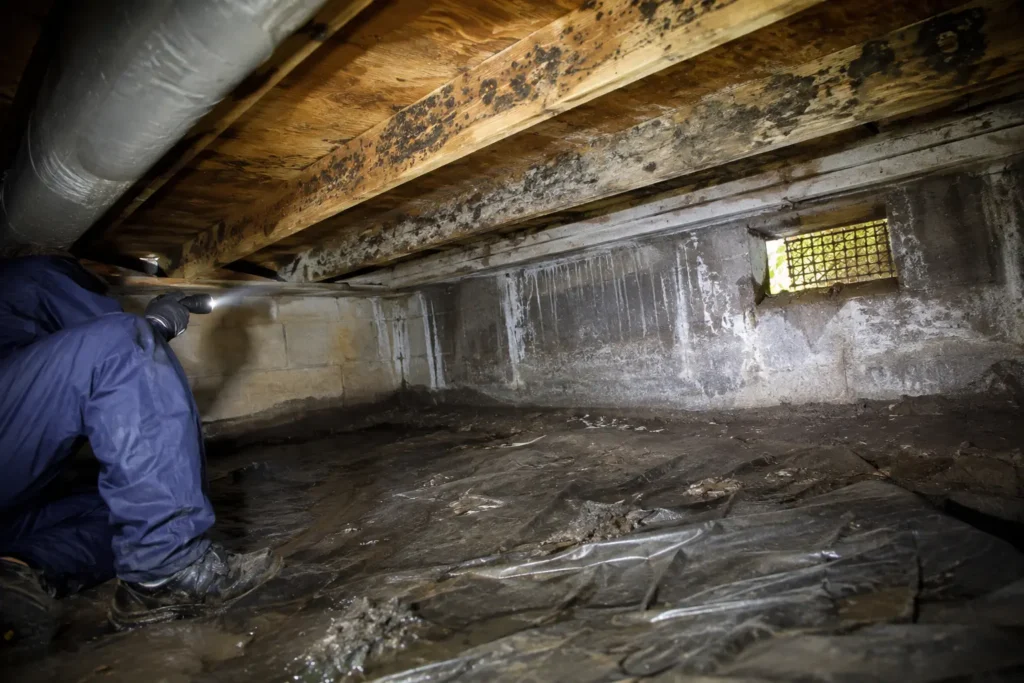
Crawl space repair Peoria IL homeowners need is one of the most consistently overlooked categories of home maintenance – not because the problems are subtle, but because the crawl space itself is out of sight and rarely visited. By the time most Peoria homeowners discover a crawl space problem, it has usually been developing for months or years.
This guide covers what crawl space problems actually look like, what causes them in Peoria’s specific climate, how they affect the rest of the home, and what a proper repair process involves.
Why Peoria IL Crawl Spaces Are High-Risk Environments
Peoria’s combination of humid summers, cold winters, and proximity to the Illinois River creates crawl space conditions that are more challenging than most regions. The underlying factors:
High ambient humidity – from May through September, Peoria’s outdoor relative humidity regularly exceeds 70 percent. Crawl spaces that aren’t properly sealed draw this humid air in through foundation vents and gaps, creating a consistently moist environment that supports mold growth on wood framing and floor joists.
Seasonal groundwater pressure – during Illinois River flooding season, March through June, rising groundwater levels push moisture through foundation walls and concrete floors into crawl spaces. Block foundation homes, common across older Peoria neighborhoods like West Central and East Bluff, are particularly vulnerable because block absorbs moisture readily.
Freeze-thaw cycles – Peoria’s winters create repeated freeze-thaw cycles that widen foundation cracks over time, creating new entry points for moisture intrusion that weren’t present when the home was built.
Clay-heavy soil – Peoria County’s clay-dominant soil holds water against the foundation rather than draining it away, which maintains consistent moisture pressure against crawl space walls across the wet months.
These factors combine to make crawl space repair Peoria IL jobs more involved than equivalent jobs in drier inland climates – the moisture sources are more persistent and the damage progression is faster. This is why crawl space repair Peoria IL jobs consistently involve more moisture sources and more structural damage than equivalent jobs in drier inland climates.
What Crawl Space Problems Look Like – Signs Something Is Wrong
Most crawl space repair Peoria IL situations give signals inside the home long before anyone looks under the floor – the crawl space itself is rarely the first place homeowners check.
- Musty or earthy odors inside the home, particularly on the first floor, that worsen after rain events or during humid months
- Cold floors in winter that are colder than expected even with adequate insulation – often indicates insulation that has sagged or fallen due to moisture absorption
- Visible mold or mildew on floor joists, sill plates, or subflooring – identifiable during a crawl space inspection
- Wood rot on floor joists or sill plates – structural framing that has been wet long enough to begin decomposing
- Increased allergy symptoms in household members that appeared gradually – crawl space air moves upward through a home by stack effect, carrying mold spores and particulates into living spaces
- Pest activity – mice, insects, and other pests are drawn to moist crawl spaces and use compromised vapor barriers and insulation as nesting material
- Elevated indoor humidity readings during summer months that don’t correspond to outdoor conditions
Any one of these signs warrants a crawl space inspection. Several occurring together indicate a problem that has been developing for some time.
How Crawl Space Problems Affect Indoor Air Quality
The connection between crawl space conditions and indoor air quality is one of the most underappreciated aspects of home health in Peoria. It operates through a principle called the stack effect – warm air inside a home rises and exits through the upper levels, drawing replacement air up from the lower levels, including the crawl space.
Studies by building science researchers have found that 40 to 60 percent of the air on a home’s first floor has passed through or originated from the crawl space. In a crawl space with active mold growth, elevated moisture, or decaying organic material, that means mold spores, VOCs from decomposition, and high-humidity air are being continuously introduced into the living space regardless of how clean the rest of the home is.
For Peoria homeowners who have noticed respiratory symptoms, persistent odors, or elevated indoor humidity without an obvious cause, the crawl space is the first place to look – not the last.
According to the EPA’s guidelines on indoor air quality and moisture control, crawl space moisture is one of the primary contributors to poor indoor air quality in residential buildings, and encapsulation is the most reliable long-term solution for homes with chronic crawl space moisture problems.
How Crawl Space Moisture Damages the Foundation and Structure
Beyond air quality, crawl space repair Peoria IL jobs frequently uncover progressive structural damage that has been accumulating for months or years before the inspection.
Wood rot on floor joists – floor joists that remain wet for extended periods begin to decompose. This process starts with surface mold and progresses to structural decay that compromises the floor system’s load-bearing capacity. Floor joists showing active rot need to be sistered or replaced before encapsulation begins.
Sill plate deterioration – the sill plate is the wood member that sits directly on top of the foundation wall, connecting the floor framing to the foundation. It’s the most moisture-exposed structural wood element in most homes. Sill plate rot in Peoria homes with block foundations is common in neighborhoods where groundwater intrusion has been occurring for years.
Subfloor degradation – plywood and OSB subflooring absorbs moisture from below when crawl space humidity is consistently high. The subfloor swells, delaminates, and eventually loses structural integrity. This shows up as soft spots in the floor above, squeaking that wasn’t there before, and in severe cases, visible deflection underfoot.
Foundation crack progression – moisture that enters through existing foundation cracks carries minerals that deposit as it evaporates, slowly widening cracks over multiple freeze-thaw cycles. Our foundation waterproofing service addresses both the existing cracks and the moisture pressure that drives continued progression.
Crawl Space Water Extraction – When the Space Has Already Flooded
When a crawl space has taken on standing water – from groundwater intrusion, a plumbing failure, or foundation seepage – water extraction is the first step before any repair work can begin.
Standing water in a crawl space creates immediate mold risk on any wood it contacts. It also saturates the soil beneath the vapor barrier, which continues releasing moisture into the crawl space air long after the visible water is gone. Our crawlspace water extraction service uses portable extraction equipment sized for confined spaces, followed by commercial drying equipment and moisture monitoring to confirm the space is dry before any encapsulation or structural repair work begins.
For Peoria homeowners dealing with recurring crawl space flooding after Illinois River season, the extraction addresses the immediate problem – but the root cause, typically drainage deficiency or foundation seepage, needs to be addressed before encapsulation to prevent the same flooding from compromising the new installation.
Crawl Space Encapsulation – What It Is and Why It Works
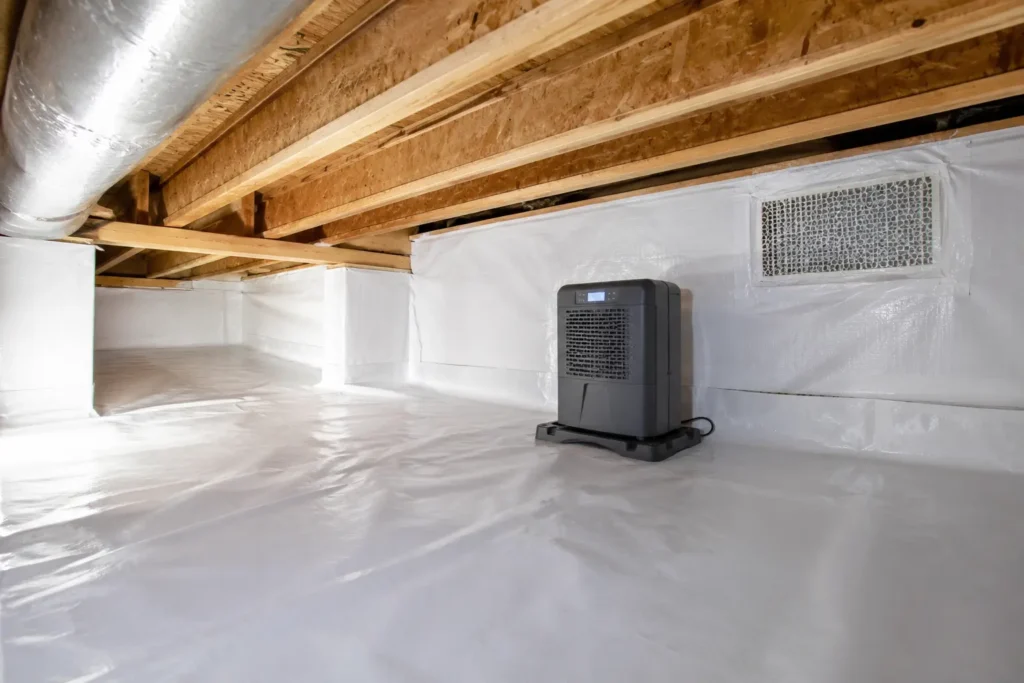
Crawl space encapsulation is the most effective long-term solution for chronic crawl space moisture problems. It converts the crawl space from a vented, unconditioned space to a sealed, controlled environment.
The encapsulation process involves:
- Sealing all foundation vents that currently allow outdoor air into the crawl space
- Installing a heavy-duty vapor barrier – typically 20 mil polyethylene – across the entire floor and up the foundation walls, sealed at all seams and to the walls
- Installing a crawl space dehumidifier sized to maintain relative humidity below 50 percent year-round
- Addressing any active water entry points before sealing the space
Our crawlspace encapsulation service includes a full moisture assessment before installation to identify any active seepage or drainage issues that need to be corrected first. Encapsulating over an active water intrusion point is one of the most common installation mistakes – it traps moisture inside rather than excluding it.
After encapsulation, crawl space humidity stays consistently low, mold growth stops, wood framing dries and stabilizes, and indoor air quality improves measurably. The energy efficiency benefit is also significant – encapsulated crawl spaces reduce heating and cooling loads because the floor above is no longer exposed to outdoor temperature extremes.
Mold in the Crawl Space – What It Means and What Happens Next
Mold discovery during a crawl space repair Peoria IL inspection changes the entire repair sequence – encapsulation cannot begin until active mold is fully remediated. The mold needs to be addressed before encapsulation begins – encapsulating over active mold growth seals the spores inside, where they continue to affect air quality and degrade structural materials.
Our mold remediation services for crawl spaces follow the same protocol as above-grade mold – containment, HEPA vacuuming, antimicrobial treatment, and post-remediation clearance testing before the encapsulation installation proceeds. The mold remediation and encapsulation often run as a combined project because the root cause – moisture – drives both.
For Peoria homeowners who have already dealt with mold remediation in other parts of the home, our mold remediation guide covers the full process and timeline in detail.
Crawl Space Repair in Dunlap and Surrounding Peoria County Communities
Our crawl space repair team serves Peoria and surrounding Peoria County communities including Dunlap, Bartonville, North Florence, Edwards, Hanna City, and Peoria Heights. For Dunlap homeowners specifically, where newer construction often includes crawl spaces rather than full basements, encapsulation is particularly relevant – newer crawl spaces in clay-soil environments develop moisture problems even in homes that are only a few years old, because the construction disturbed the soil drainage patterns that existed before building.
Final Thought – Crawl Space Repair Peoria IL Starts With an Inspection
Crawl space repair Peoria IL problems don’t resolve themselves. Moisture that enters a crawl space continues cycling – evaporating into the space, rising through the floor into the living area, and being replaced by more moisture from the soil and foundation. Without intervention, the damage to wood framing, insulation, and subfloor accumulates progressively.
The starting point for every crawl space repair job is an inspection that establishes what’s actually happening – moisture levels, mold presence, structural condition – before any repair decisions are made.
For crawl space repair Peoria IL response right now, call (309) 549-1827 – available 24 hours a day, seven days a week, with same-day crawl space inspection and assessment across Peoria and surrounding Peoria County communities.
Leave a Reply