
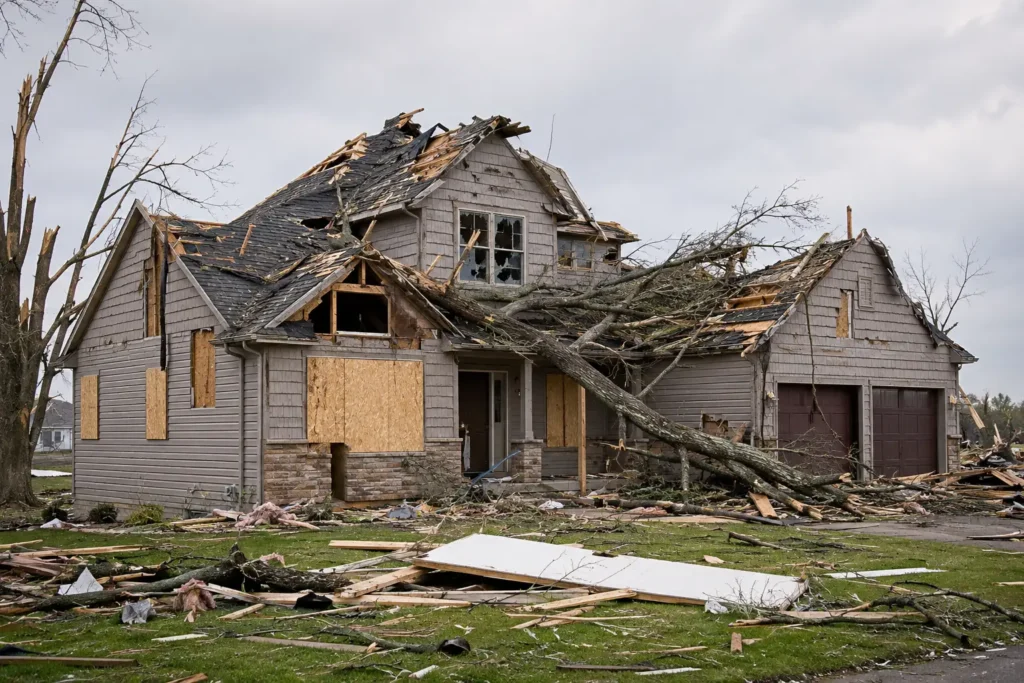
Tornado damage restoration Peoria IL homeowners need after a direct hit or near-miss is unlike any other restoration category. The damage scope is immediate, simultaneous, and often affects multiple systems at once – roof, walls, windows, utilities, and foundation – while the stress of the event itself makes clear thinking difficult. Knowing what to do in the hours after a tornado is the difference between limiting total damage and allowing a bad situation to compound.
This guide covers what tornado damage actually involves, how to assess it safely, and what a proper restoration response looks like from emergency stabilization through full reconstruction.
Why Peoria IL Has Above-Average Tornado Risk
Peoria sits in a geographic zone that experiences significantly more tornado activity than the national average. Central Illinois is part of the broader Midwest tornado corridor where the convergence of warm Gulf air moving north and cold continental air from the Rockies creates the atmospheric instability that generates tornado-producing supercells.
Peoria County has recorded tornado events in virtually every decade since records have been kept. The peak risk window runs April through June, with secondary risk in late August and September. Tornadoes in central Illinois can be fast-moving and produce wind speeds ranging from 65 mph in a weak EF0 event to over 200 mph in major EF4 or EF5 storms.
For Peoria homeowners, this isn’t abstract risk. It’s the context that makes tornado damage restoration Peoria IL preparedness – knowing what to do before and immediately after a tornado – practically valuable information rather than theoretical planning.
What a Tornado Does to a Home – The Damage Categories
Tornado damage affects a home differently from any other storm type because of the rotational wind forces involved. Standard straight-line wind pushes against a structure in one direction. Tornado winds rotate, which means they simultaneously push, pull, and twist structural components in ways that standard construction isn’t always designed to resist.
Roof damage – the most common and most severe category. Tornado winds create both positive pressure (pushing against the windward side) and negative pressure (lifting from the leeward side and the roof surface). This combination lifts roofing materials, rafter connections, and in severe events, entire roof sections from the wall top plates. A roof that appears intact from the ground may have had its structural connections compromised by wind forces that didn’t produce visible exterior damage.
Wall and structural damage – exterior walls in the tornado’s direct path can experience enough lateral force to crack or shift the wall assembly off the foundation. Interior walls, particularly those aligned parallel to wind direction, may show less visible damage while having lost structural connection to the roof or floor above.
Window and door failure – tornado wind pressure causes window and door failures that allow wind-driven rain to enter the structure while the storm is still active. The interior damage from this rain intrusion often exceeds the structural damage from the wind itself in moderate tornado events.
Utility damage – gas line damage, electrical panel impact, and water line disruption are common secondary consequences of structural damage. These create safety hazards that affect the approach to entering and assessing a tornado-damaged home.
Flying debris – tornado-propelled debris causes impact damage to walls, roofing, windows, and HVAC equipment that is distinct from the wind damage itself. Impact points are entry points for water after the storm.
The First Hour After a Tornado – Safety Before Assessment
Tornado damage restoration Peoria IL response cannot begin until the property is confirmed safe to enter. Several hazards are present in a tornado-damaged home that aren’t obvious on initial approach:
Gas leaks – if the home smells of natural gas or propane after a tornado, do not enter. Call the utility company from a safe distance. Gas line connections compromised by structural movement may not be immediately obvious from the exterior.
Electrical hazards – downed power lines on or near the property, exposed wiring inside the structure, and flooded areas near electrical panels all create electrocution risk. Confirm with the utility that power has been disconnected before entering areas with standing water or visible electrical damage.
Structural instability – tornado-damaged roof sections can shift or collapse hours after the initial event. Chimneys that appear intact from the ground may have lost their interior structural integrity. Load-bearing walls that took direct impact may be at risk of progressive collapse.
Contamination – if flooding accompanied the tornado, groundwater and sewage backup create the same category 3 contamination hazards as any flooding event.
Once safety is confirmed, document everything before touching anything – video and photographs of every damaged area, inside and outside, before any debris is moved or any emergency work begins. This documentation is essential for insurance claims.
Emergency Stabilization – What Has to Happen in the First 24 Hours
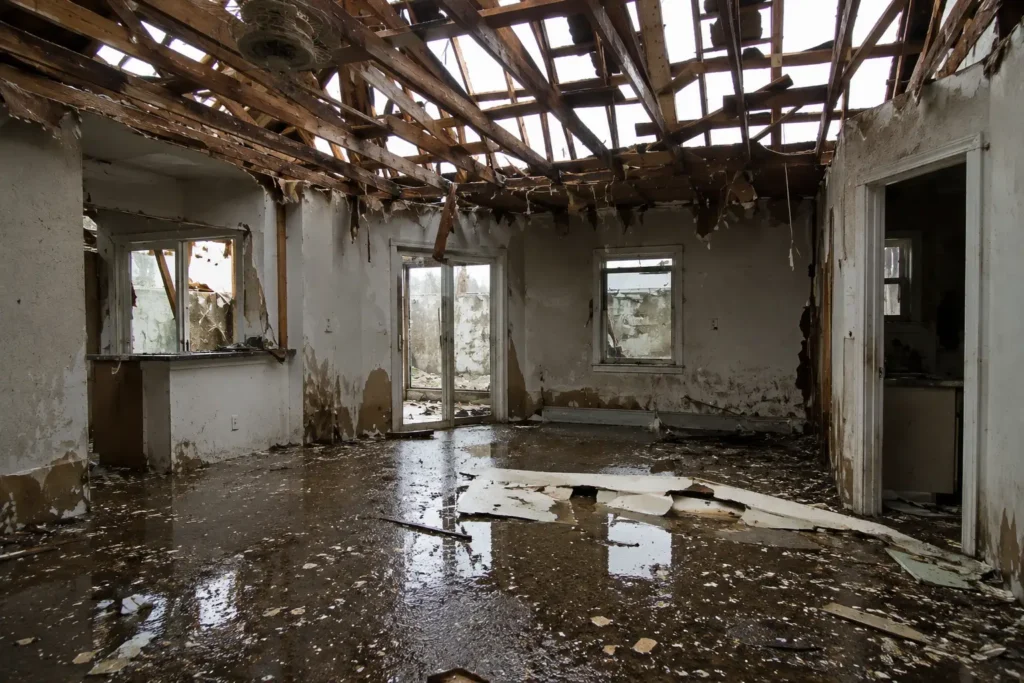
Tornado damage restoration Peoria IL emergency response focuses on stopping additional damage before assessment and restoration planning begins. Three things need to happen as fast as possible:
Emergency tarping – any breach in the building envelope – missing roof sections, broken windows, damaged walls – needs to be sealed against further weather exposure. Our emergency tarping service deploys same-day for tornado events across Peoria County, because every hour a compromised roof section sits open during post-tornado rain adds interior water damage that compounds the original event.
Debris removal from the immediate structure – fallen trees, broken structural members, and debris impeding access to the property need to be removed before interior assessment can proceed safely. Our debris removal after storms service handles the immediate access clearing that allows the restoration assessment to begin.
Utility disconnection confirmation – gas, electrical, and water supply lines need to be confirmed off before any interior work begins in a significantly tornado-damaged structure.
All of this happens before formal damage assessment and before any insurance adjuster visits the property. Emergency stabilization is what prevents a total loss from becoming worse – and it’s covered under most standard Illinois homeowner’s policies as emergency mitigation.
Water Damage Inside a Tornado-Damaged Home
Tornado damage restoration Peoria IL jobs almost always involve a significant water damage component that’s separate from the structural damage. Rain that enters through a compromised roof or blown-out windows during or after the tornado event saturates ceiling assemblies, wall cavities, and floor systems – sometimes across the entire upper level of the home.
This water damage has to be addressed with the same urgency as any water damage event. Structural drying needs to start within the first 24 to 48 hours to prevent mold establishment in wet materials. In Peoria’s summer humidity, that window is even shorter than national averages suggest – warm temperatures and high ambient humidity accelerate mold growth significantly.
The complication in tornado events is that structural drying can’t begin in areas where emergency tarping or stabilization work is still active. The two processes have to be sequenced carefully to ensure drying equipment isn’t placed in areas still open to weather intrusion.
What Tornado Damage Restoration Actually Involves
After emergency stabilization and safety confirmation, tornado damage restoration Peoria IL follows a structured process:
Structural assessment – a full engineering assessment of load-bearing components, roof connections, and wall assemblies determines what’s structurally sound versus what needs replacement before reconstruction can begin. In moderate to severe tornado events, this assessment often reveals damage that wasn’t visible from the exterior.
Water extraction and drying – all areas that took on water during or after the tornado event get extracted and set up for structural drying. Daily moisture readings track progress until all structural materials reach acceptable levels.
Wind damage repair – our wind damage repair service covers the structural repairs to roof framing, wall assemblies, and exterior components that tornado winds compromised. This runs parallel to drying in areas where structural work can proceed safely.
Reconstruction – replacing damaged drywall, roofing, siding, windows, and flooring after structural integrity is confirmed and drying is complete.
Contents restoration – belongings damaged by wind, impact, or water intrusion during the tornado event are assessed for restoration or replacement.
According to FEMA’s tornado damage guidance for homeowners, documenting all damage before any cleanup or repair begins is the most important step for insurance purposes – and hiring licensed contractors for all structural repair work is required for claim reimbursement in most Illinois policies.
Tornado Damage and Insurance – The Peoria Homeowner’s Claim Reality
Standard Illinois homeowner’s insurance covers tornado damage as a named peril under the dwelling coverage section. What matters for claim processing is documentation and timing.
Most policies require notification within a defined window after a loss event – often 24 to 72 hours. Missing that window can complicate the claim even when the damage is clearly covered. The emergency stabilization work – tarping, boarding, debris removal from the immediate structure – is covered as part of the claim when done by a licensed contractor and documented properly.
The total loss threshold is a question many Peoria homeowners face after significant tornado events. If restoration and repair cost exceeds a defined percentage of the home’s insured value – typically 50 to 80 percent depending on the policy – the insurance company may declare a total loss and settle at replacement cost rather than funding restoration. Understanding where your home falls relative to this threshold before reconstruction quotes are finalized is important.
Hanna City and Rural Peoria County – Tornado Risk Outside the City
Tornado damage restoration Peoria IL response extends well beyond the city limits. Rural Peoria County communities like Hanna City, Edwards, and Dunlap face the same tornado risk as the city itself – and in some cases higher risk because rural properties are more exposed to open-field tornado paths that don’t have the wind-breaking effect of urban density.
Rural homes in Hanna City and surrounding communities also tend to have more outbuildings – barns, detached garages, storage structures – that are significantly more vulnerable to tornado wind forces than primary residential construction. Damage assessment after a tornado event in rural Peoria County has to account for all structures on the property, not just the primary residence.
Response time to rural properties can be longer than city locations. For Hanna City and Edwards area homeowners, having an emergency contact and restoration company identified before tornado season reduces the delay between event and emergency stabilization response.
Final Thought – Tornado Damage Restoration Peoria IL Starts Before the Storm
The most effective tornado damage restoration Peoria IL preparation happens before a tornado hits – knowing your insurance policy, having a restoration company contact identified, and understanding what the first steps look like so you can move quickly when the situation is real.
For homeowners who want to understand what happens in the days after any major storm event, our storm damage repair guide covers the broader storm response process in detail.
For tornado damage restoration Peoria IL response right now, call (309) 549-1827 – available 24 hours a day, seven days a week, with same-day emergency stabilization and tarping across Peoria and surrounding Peoria County communities.
Leave a Reply