
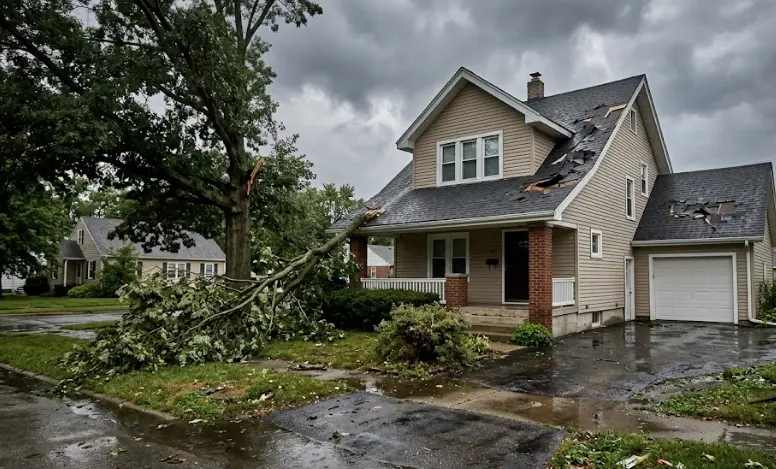
Storm damage repair Peoria IL homeowners need every spring and summer follows a pattern that’s different from what most people expect. The storm itself might last an hour. What it leaves behind water inside walls, damaged roofing, flooded basements, and structural moisture, can take weeks to address properly if the first response is handled wrong.
This guide covers what Midwest storms actually do to Peoria homes, what the repair process looks like from day one, and why the first 24 hours after a storm matter more than most homeowners realize.
What Makes Peoria IL Storms Different From Other Regions
Peoria sits in the heart of central Illinois, where the convergence of Gulf moisture and cold fronts from the north creates some of the most intense thunderstorm activity in the Midwest. Spring storm season runs April through June, with peak tornado risk in May. Summer storms follow in July and August, often arriving as fast-moving squall lines that produce straight-line winds exceeding 70 miles per hour.
What makes these storms particularly damaging to Peoria homes is the combination of high wind speed, heavy rainfall volume, and the Illinois River’s influence on the local water table. A major storm event doesn’t just damage roofs and siding, it simultaneously raises groundwater levels, overwhelming basement drainage systems in neighborhoods like East Bluff, Bartonville, and West Central that already sit close to the river.
The result is often a combined damage event and why storm damage repair Peoria IL restoration teams respond to more complex jobs during spring season than any other time of year.
The Most Common Types of Storm Damage in Peoria Homes
Storm damage repair Peoria IL jobs almost always involve one or more of these damage types, depending on storm direction, wind speed, and how close the home sits to the Illinois River. Understanding what a storm actually does to a home helps prioritize the repair sequence:
- Roof damage — missing or lifted shingles, damaged flashing around chimneys and vents, and cracked ridge caps are the most common entry points for water after a Midwest windstorm. Water that enters through roof damage travels downward through attic insulation, ceiling assemblies, and wall cavities before it becomes visible inside the home.
- Window and door seal failure — horizontal wind-driven rain enters through compromised window seals and door frames, often on the west and southwest faces of homes that bear the brunt of Peoria’s prevailing storm direction.
- Siding damage — cracked or lifted siding allows moisture to reach the house wrap and sheathing beneath, leading to wall cavity saturation that doesn’t dry out on its own.
- Basement flooding — when heavy rain coincides with a high Illinois River stage, groundwater intrusion through basement floors and block foundation walls is common across older Peoria neighborhoods.
- Gutter and downspout failure — damaged gutters direct water against the foundation rather than away from it, accelerating basement intrusion during and after the storm.
Step 1 – Safety First, Then Documentation
Before touching anything after a storm, two checks matter most.
First, electrical safety. Storm damage that involves water near electrical panels, outlets, or submerged equipment in the basement is a serious hazard. If you’re not certain power has been cut to affected areas, don’t enter until the utility company or an electrician confirms it’s safe.
Second, documentation. Before any cleanup, tarping, or furniture moving begins, photograph and video every affected area – exterior damage, interior water staining, standing water levels, and any damaged belongings. Insurance adjusters require pre-cleanup documentation to process storm damage claims accurately. Starting cleanup before this step creates disputes that delay payouts.
Step 2 – Stop Active Water Entry Where You Safely Can
Emergency tarping over a damaged roof section is the single most effective action a homeowner can take immediately after storm damage. Every hour a compromised roof section is exposed to additional rainfall extends the water intrusion into the attic and ceiling assembly.
Temporary boarding of broken windows stops additional wind-driven rain from entering. Sandbag placement at basement entry points can slow groundwater intrusion while professional extraction gets scheduled.
What not to do – do not open windows to “air things out” during or immediately after a storm. During Peoria’s summer months, outdoor humidity is typically high enough that opening windows slows the drying process rather than helping it. This is particularly true in July and August when overnight humidity regularly exceeds 80 percent across central Illinois.
Step 3 – Call for Professional Assessment Same Day
Storm damage repair Peoria IL assessment needs to happen the same day as the storm event, not the next morning. Water that has entered through a damaged roof section or compromised foundation wall begins its clock immediately, and the difference between an assessment that starts within a few hours versus one that starts 24 hours later directly affects the total scope of repair.
Our flood damage cleanup service begins with full moisture mapping using thermal imaging and moisture meters across every affected surface before any equipment is placed. This mapping identifies water that has traveled beyond the visible damage area – into wall cavities, across ceiling joists, and into subfloor material, which is where most of the long-term structural damage actually occurs.
For Peoria homes that experienced both roof intrusion and basement flooding in the same storm event, the assessment needs to address both damage paths separately, because the drying approach differs for each.
What Storm Damage Does Inside Your Walls
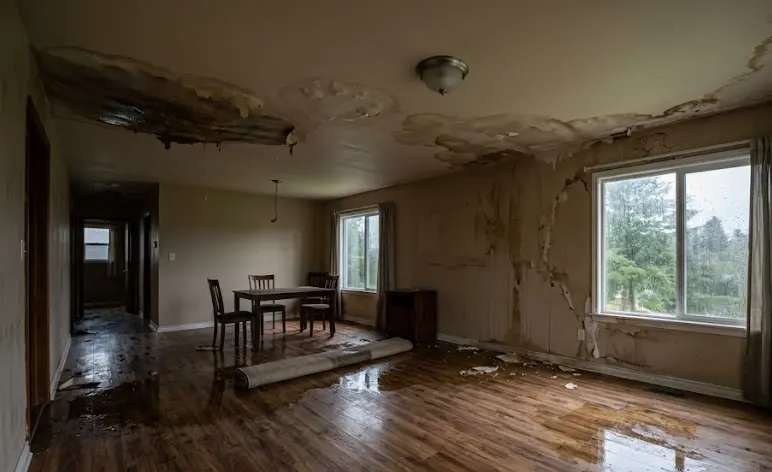
This is the part of storm damage repair that catches most Peoria homeowners off guard. Visible damage – stained ceilings, wet carpets, standing water in the basement, is easier to understand than what’s happening inside structural assemblies at the same time.
When wind-driven rain penetrates through a roof section or window seal, it follows framing members and insulation bats downward and laterally. It reaches wall cavities, top plates, and floor assemblies that show no visible damage on the surface. This hidden moisture is where mold establishes itself within 24 to 48 hours if professional drying equipment doesn’t extract it.
For basement flooding specifically, our flooded basement cleanup process addresses block foundation absorption, floor drain backflow, and subfloor moisture separately from surface water extraction, because each requires different equipment placement and drying protocols. This is why storm damage repair Peoria IL jobs that start within the first few hours consistently cost less and take fewer days than jobs where water sat overnight
Storm Damage and Insurance – What Peoria Homeowners Should Know
Standard homeowner’s insurance in Illinois covers storm damage repair Peoria IL claims from wind, hail, and rain intrusion through the building envelope. What it typically excludes is flooding from external sources – groundwater intrusion, overland flooding, and Illinois River backflow events.
This distinction matters significantly for Peoria homeowners because a single storm event often causes both covered damage (roof and siding from wind) and excluded damage (basement flooding from groundwater) at the same time. Understanding which portion of the damage falls under which coverage type before filing a claim prevents delays and disputes.
According to FEMA’s National Flood Insurance Program guidelines, flood damage from external water sources requires separate flood insurance, standard policies do not cover it regardless of what caused the storm. Homeowners in Peoria County flood zones should confirm their NFIP coverage is current before storm season begins each year.
Our team documents every damage category separately during the assessment process, which helps insurance adjusters process the covered portions of a claim accurately while clearly identifying what requires flood insurance.
How Long Does Storm Damage Repair Take in Peoria IL?
The storm damage repair Peoria IL timeline depends on what was damaged and how quickly the response started. A general framework for most residential storm damage jobs in Peoria:
- Day 1 — assessment, emergency tarping or boarding, water extraction begins
- Days 2 to 5 — structural drying phase, commercial equipment running continuously, daily moisture readings tracked
- Day 6 onward — material evaluation, removal of anything that didn’t dry within safe parameters
- Week 2 to 3 — reconstruction planning, material sourcing, permits if needed
- Week 3 to 6 — active reconstruction, drywall, roofing, siding, flooring, paint
Jobs where the storm involved both roof damage and basement flooding, or where water sat for more than 24 hours before extraction started, typically run toward the longer end of this range. For homeowners in areas like Dunlap and Peoria Heights, where homes tend to have larger footprints and older roofing assemblies that are more vulnerable to Midwest wind events, the assessment and drying phases require more equipment and more time than a typical city lot home.
Burst Pipe Damage During Storms – A Common Secondary Problem
Peoria’s storm events sometimes cause a secondary issue that homeowners don’t anticipate – burst pipes. High wind events that knock out power during winter storms allow interior temperatures to drop rapidly in unoccupied or poorly insulated spaces, leading to frozen and burst pipes that add a clean water damage component to an already active storm damage job.
Our burst pipe damage cleanup service runs separately from storm damage repair Peoria IL cleanup when both occur simultaneously, because the water source categories are different and insurance coverage applies differently to each., because the water source categories are different and insurance coverage applies differently to each.
Final Thought – Storm Season in Peoria Means Being Ready Before the Storm
The homeowners who come out of Peoria’s storm season with the lowest total repair costs and the fastest recovery times are consistently the ones who had a plan before the storm hit, who knew what to document, who to call, and what not to do in the first few hours.
If a storm has already hit your home and you’re trying to figure out what happens next, our flood cleanup first 24 hours guide covers the immediate steps in detail.
For storm damage repair Peoria IL response right now, call (309) 549-1827) – available 24 hours a day, seven days a week, with same-day assessment and extraction available across Peoria and surrounding Peoria County communities.
Leave a Reply