
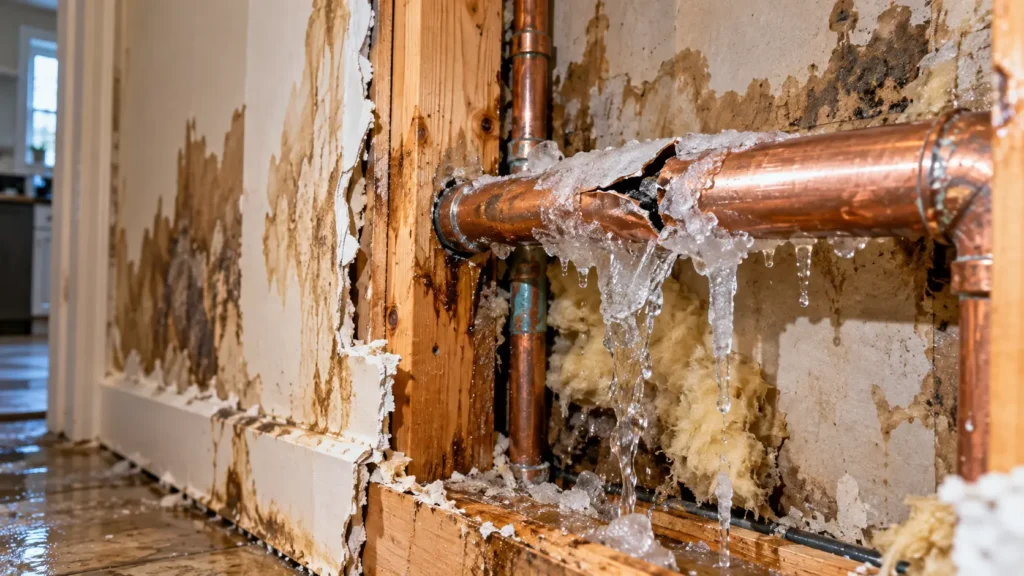
Frozen pipe burst cleanup Peoria IL homeowners need every winter is one of the most time-sensitive water damage situations a home can face. Unlike a slow leak that builds gradually, a burst pipe releases water under pressure – sometimes from a supply line that was running at full line pressure when it froze. The volume of water that can enter a home in the hours between when a pipe bursts and when it’s discovered is significant, and the damage scope expands with every hour that passes before extraction starts.
This guide covers why Peoria pipes freeze, what happens when they burst, what to do in the first hour after discovery, and what professional Frozen Pipe Burst Cleanup Peoria IL involves to help limit water damage and restore your home safely.
Why Peoria IL Has Higher Frozen Pipe Risk Than Most Cities
Peoria’s winter temperature profile creates frozen pipe risk that Midwest homeowners understand well – but the specific factors that make Peoria pipes more vulnerable than homes in milder climates are worth understanding.
Peoria winters routinely produce multi-day stretches of sub-zero temperatures between December and February. The Illinois River’s proximity creates a moisture factor that compounds the cold – humid air from the river basin makes the perceived cold more penetrating and increases the moisture content inside unheated wall cavities and crawl spaces.
Older homes in established Peoria neighborhoods like West Central, East Bluff, North Florence, and Center Bluff were built before modern insulation standards. Exterior walls in these homes often have limited or no insulation between the interior drywall and the exterior sheathing – which means supply lines running through those cavities are exposed to temperatures that track closely with outdoor conditions during extended cold snaps.
Crawl space homes in Peoria County are particularly vulnerable. Supply lines running through an unheated crawl space have no thermal protection from outdoor temperatures, and the wind chill effect under the structure accelerates freezing in those lines during periods of sustained cold. This is what makes frozen pipe burst cleanup Peoria IL calls so concentrated in these older neighborhoods during every extended cold snap.
What Actually Happens When a Pipe Freezes and Bursts
Frozen pipe burst cleanup Peoria IL calls follow a consistent pattern. Understanding the physics helps explain why the damage is often more significant than homeowners expect.
When water inside a pipe freezes, it expands. That expansion creates pressure inside the pipe – not at the ice formation itself, but in the liquid water section between the ice blockage and a closed fixture downstream. That pressure builds until it finds the weakest point in the system, which is usually a fitting, a joint, or a section of pipe that was already slightly compromised by previous freeze-thaw cycles.
When the pipe gives way, the supply system is still under full line pressure. Water doesn’t trickle from a burst pipe – it exits under pressure until someone shuts off the main. A supply line running at normal residential water pressure can release a significant volume of water in a short period of time. If the burst is inside a wall cavity or above a ceiling, that water saturates framing, insulation, and drywall before it appears at a visible surface.
The secondary event – often worse than the burst itself – happens when the ice thaws. A pipe that froze but didn’t burst may have developed micro-cracks from the expansion pressure. Those cracks don’t leak while the pipe is frozen. They become active leaks during the thaw, sometimes days after the original freeze event, in an area of the home where no one is watching for water because the original freeze event appeared to have passed without damage.
The First Hour After Discovering a Burst Pipe – What Matters Most
Frozen pipe burst cleanup Peoria IL response in the first hour determines more about total damage scope than any other period in the cleanup process. Three things need to happen immediately:
Shut off the main water supply. Every adult in a Peoria home should know where the main shutoff is before winter begins. It’s typically located where the main water line enters the home – often in the basement near the front foundation wall, or in a utility room. Turning it off stops the pressure-fed water release and limits how much water enters the home. Don’t wait to find the burst location – shut off the main first.
Don’t restore electrical power to affected areas. Water and electricity create an immediate safety hazard. If water has reached areas near electrical outlets, panel boxes, or hardwired appliances, treat those areas as potentially energized until an electrician confirms they’re safe. A flooded basement with an active electrical panel is not a space to enter without professional safety confirmation.
Document before cleanup begins. Photograph every affected area – standing water depth, wet walls, damaged belongings, and visible pipe damage – before moving anything or extracting water. This documentation supports your insurance claim and establishes pre-cleanup conditions that adjusters need to see.
What Professional Frozen Pipe Burst Cleanup Involves
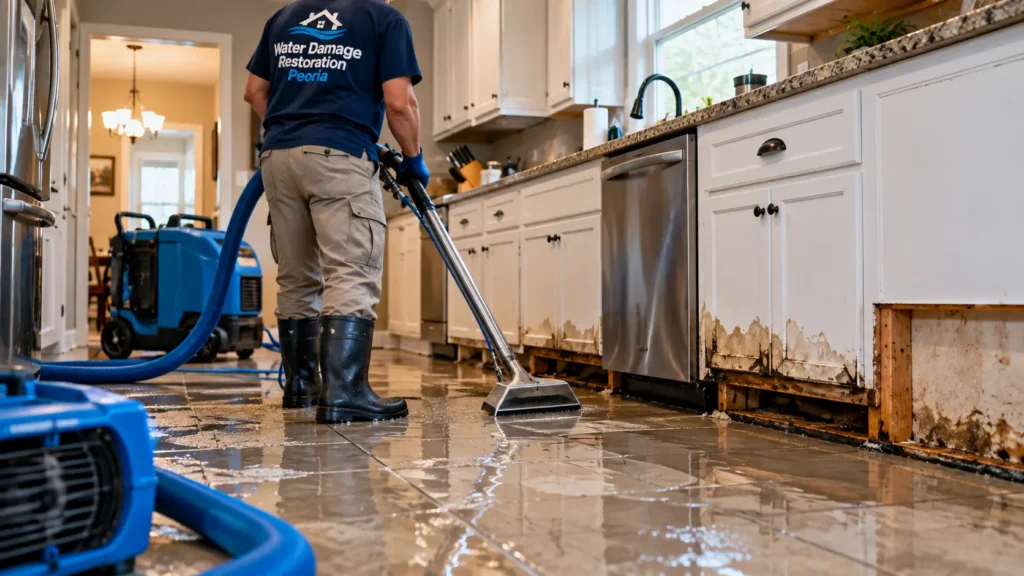
Frozen pipe burst cleanup Peoria IL is not just water extraction – it covers the full scope of what the burst water event has done to the structure, from the pipe itself through every surface the water contacted. The process covers the full scope of what the burst water event has done to the structure:
Pipe assessment and repair coordination – our water pipe break repair and cleanup service assesses both the burst section and adjacent pipe for stress damage from freeze-thaw pressure before extraction begins. Repairing only the visible burst while leaving compromised adjacent sections creates the conditions for the next failure event within the same season.
Water extraction – commercial extraction equipment removes standing water from affected areas. Burst pipes from supply lines often affect multiple rooms because water travels along floor joists, down wall cavities, and through ceiling assemblies before appearing at a visible surface. The affected area is almost always larger than what’s visible on initial inspection.
Moisture mapping – thermal imaging and calibrated moisture meters identify every wet zone in the affected structure, including wall cavities, subfloor assemblies, and ceiling sections that show no visible damage on the surface. This mapping drives equipment placement and determines the full scope of drying required.
Structural drying – commercial dehumidifiers and air movers run until all structural materials return to safe moisture levels, confirmed by daily readings. In Peoria’s winter conditions, where indoor humidity during heating season is typically lower than summer, structural drying for burst pipe events often completes faster than equivalent summer flooding events – but it still requires professional equipment to reach moisture inside wall cavities.
Material assessment – insulation that absorbed water from a burst pipe is almost always a replacement item. Saturated fiberglass or mineral wool insulation doesn’t return to its original thermal performance after drying, and it holds moisture against adjacent framing in ways that create mold risk if left in place.
How Far Water Travels From a Burst Pipe – Why the Scope Is Always Larger Than Expected
This is the aspect of frozen pipe burst cleanup that most Peoria homeowners underestimate. The visible wet area – the standing water on the floor, the wet ceiling tile, the damp wall surface – is the end point of water that started traveling the moment the pipe gave way.
In a two-story home with a burst pipe in a second-floor bathroom, water from that pipe travels: through the subfloor, along floor joists, through the ceiling assembly of the room below, and in some cases along the top plate of a first-floor wall into the wall cavity. By the time water appears on the first-floor ceiling, the subfloor above it has been wet for the full period between the burst and discovery, and the wall cavities between floors may be saturated as well.
Our burst pipe damage cleanup service maps the full travel path of the water using thermal imaging before any reconstruction decisions are made – because drying only the visible affected area while leaving wet structural materials in hidden cavities creates the mold and structural damage that shows up months after the repair appears complete. This is the most consistently underestimated aspect of any frozen pipe burst cleanup Peoria IL job and it’s why moisture mapping before reconstruction decisions are made is non-negotiable.
The Micro-Crack Problem – Why Pipes Freeze Again After the Thaw
Frozen pipe burst cleanup Peoria IL response often needs to account for a secondary event that homeowners don’t anticipate. A pipe that survived the freeze without an obvious burst may have developed internal stress fractures from the expansion pressure. These micro-cracks don’t cause visible leaking while the pipe remains frozen – the ice itself seals the crack.
When temperatures rise and the pipe thaws, those cracks become active leaks. This thaw event can happen days after the original freeze, in a section of the home that no one is actively monitoring, because the freeze event appeared to pass without incident.
Our pipe leak detection and cleanup service uses pressure testing and acoustic detection on adjacent pipe sections after a burst pipe event to identify micro-cracked sections that are at risk before the next freeze cycle – not after they’ve produced their own water damage event.
Burst Pipe Cleanup and Insurance – What Illinois Homeowner Policies Cover
Standard Illinois homeowner’s insurance covers sudden and accidental water damage from burst pipes. The key elements for claim processing:
- Document conditions before any cleanup or repair begins – adjusters need pre-cleanup photographs
- Contact your insurer the same day as discovery – most policies have notification requirements
- Keep records of all emergency work and extraction – this supports both the property damage and any additional living expense claims if the home is temporarily uninhabitable
- Understand that gradual damage exclusions apply – a pipe that showed signs of slow leaking before the freeze event may face coverage questions that a sudden burst from a freeze event won’t
According to the Illinois Department of Insurance, homeowners have the right to choose their own restoration and repair contractor for covered claims. You are not required to use a company referred by your insurer. Proper documentation from day one is what makes a frozen pipe burst cleanup Peoria IL insurance claim go smoothly and what prevents disputes about whether the damage was sudden or gradual.
Peoria Neighborhoods Most Affected by Frozen Pipe Bursts
Frozen pipe burst cleanup Peoria IL calls concentrate in specific neighborhoods based on housing age and construction type. Older homes in North Florence, West Central, Center Bluff, and East Bluff – where pre-1970s construction with limited wall insulation is standard – account for a disproportionate share of winter burst pipe calls.
These neighborhoods feature ranch-style and bungalow construction where exterior wall cavities often contain supply lines that run close to the outside sheathing without adequate insulation buffer. During multi-day sub-zero temperature stretches, those lines can reach freezing point even with the home’s heating system running normally.
Newer suburban construction in Dunlap, Edwards, and Hanna City faces lower pipe freeze risk because modern building codes require better insulation standards and more conservative pipe routing – but garage supply lines, irrigation system connections, and outdoor hose bib connections remain vulnerable points in any Peoria home regardless of construction era. Understanding which construction type your home falls into is the starting point for any frozen pipe burst cleanup Peoria IL assessment and for preventing the next freeze event before it happens.
Preventing the Next Freeze – After Cleanup Is the Right Time
Once frozen pipe burst cleanup is complete and the home is restored, the natural next step is addressing why the pipe froze in the first place. Our frozen pipe prevention guide covers the specific vulnerabilities in Peoria home construction and what remediation steps – insulation improvements, pipe rerouting, heat tape installation – address each type of risk before the next winter season begins.
For homeowners who noticed moisture or condensation in wall cavities during the cleanup that wasn’t obviously related to the burst pipe, our hidden leak detection service can confirm whether a pre-existing slow leak or additional pipe stress is present before walls are closed up during reconstruction.
Final Thought – Speed Is What Controls the Outcome
Frozen pipe burst cleanup Peoria IL done right starts with shutting off the main, documenting conditions, and calling for professional extraction the same day. The difference between a contained cleanup job and a mold remediation and reconstruction project is almost always measured in hours – how many hours of water release occurred before the main was shut off, and how many hours passed between shutoff and professional extraction beginning.
If your Peoria home has experienced a burst pipe this winter, call (309) 549-1827 – available 24 hours a day, seven days a week, with same-day extraction and assessment across Peoria and surrounding Peoria County communities.
FAQ Section
Q1: What should I do immediately when a pipe bursts in my Peoria home?
Shut off the main water supply first – don’t try to find the burst location before doing this. Then turn off electricity to any area where water has reached or may reach electrical components. Document all visible damage with photographs before any cleanup begins. Then call a professional restoration company for same-day extraction. The main shutoff location should be known to every adult in the household before winter begins.
Q2: How much water damage can a burst pipe cause in Peoria IL?
The volume depends on how long the pipe ran before the main was shut off and the size of the supply line. More relevant than volume is how far the water traveled through the structure – burst pipe water travels through floor joists, wall cavities, and ceiling assemblies, and the affected area is consistently larger than what’s visible on the surface. Moisture mapping after extraction almost always reveals wet structural materials beyond the visible damage area.
Q3: Does homeowner’s insurance cover frozen pipe burst cleanup in Illinois?
Standard Illinois homeowner’s insurance covers sudden and accidental damage from burst pipes, including frozen pipe bursts. Contact your insurer the same day as the event, document conditions before cleanup begins, and keep records of all emergency work. Gradual damage from a slow-leaking pipe that preceded the freeze event may face different coverage treatment than a sudden burst from a freeze.
Q4: How long does frozen pipe burst cleanup take?
Most frozen pipe burst cleanup Peoria IL jobs complete emergency extraction within the first day – structural drying then runs three to seven days in Peoria winter conditions. Emergency extraction completes within the first day. Structural drying typically runs three to seven days in Peoria winter conditions, when indoor heating keeps ambient humidity lower than summer conditions. Material assessment and reconstruction timeline depends on what was damaged – minor drywall repair may complete in a week, while significant structural water travel affecting multiple rooms and floor assemblies can take two to four weeks of restoration work.
Q5: Can I dry out a burst pipe water event myself with fans and household dehumidifiers?
Household equipment moves surface air but cannot extract moisture from inside wall cavities, floor joist assemblies, or subfloor material – where most of the structural moisture from a burst pipe ends up. Surface drying without addressing structural moisture is what creates the mold problems that appear weeks after a burst pipe event seemed to be handled. Professional equipment is the practical difference between a contained cleanup and a recurring moisture problem.
Q6: What pipes are most likely to freeze in a Peoria home?
The highest-risk locations are supply lines running through exterior walls with inadequate insulation, pipes in unheated crawl spaces, garage supply lines, and outdoor hose bib connections. In older Peoria construction – pre-1970s homes in West Central, North Florence, and East Bluff – exterior wall supply lines are particularly vulnerable because the wall assemblies were built before modern insulation standards. After any freeze event, adjacent pipe sections should be assessed for stress fractures that become leaks during the thaw. For frozen pipe burst cleanup Peoria IL specifically, professional equipment is the difference between a contained one-week job and a mold remediation situation that develops over the following month.
Leave a Reply