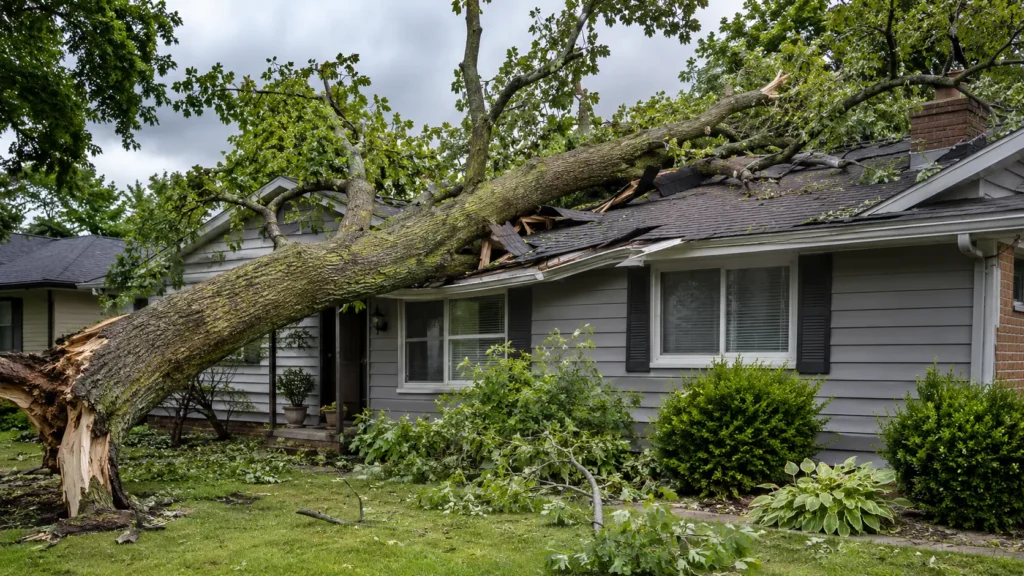
Storm debris removal Peoria IL homeowners need after a severe thunderstorm is rarely just a yard cleanup. When a tree comes down on a roof, a fence, or a garage, the visible mess is only part of the problem. A broken roof lets rain in, shingles and glass are scattered across the property, and the tree itself may be resting on damaged framing.
This guide walks through the order that protects people first, then the house, then your insurance claim.
Safety First: Before You Touch Anything
The first priority after a storm is that nobody gets hurt. Stay away from anything that could be energized or unstable.
- Treat downed power lines as live. Keep people and pets away, and call 911 and your electric utility. A tree touching a line can energize the tree.
- Do not stand under or inside rooms beneath a damaged roof section. A tree resting on broken framing can shift.
- Smell for gas. If you smell gas, leave the building and call from outside.
- Skip the chain saw unless you are trained. The CDC advises having a chain saw operator with training and experience in safe chain saw use and cutting techniques, and says bystanders should stay at least 30 feet from anyone cutting limbs or a fallen tree. For felling, it says at least two tree lengths. See the CDC chain saw safety guidance.
Fallen Tree on a House: Don’t Pull It Off Yet
It is tempting to get the tree off the house as fast as possible. Hold off until the damage has been looked at. A tree lying across a roof can be holding broken rafters in place, and moving it without a plan can drop that weight somewhere new or open a larger hole.
Removing a tree from a structure is a load-control and rigging job, not a quick cutting job. Our tree removal from structures service exists for exactly this situation. Whoever you call, ask how they plan to control the load before they start.
Document Before Anything Moves
Your insurer will want to see what the storm did, not just what the property looks like after cleanup. Good records also help any storm debris removal Peoria IL crew understand what was damaged before it moved. Before debris is cleared:
- Photograph the tree from several angles, including where it came from and where it landed
- Photograph the roof, siding, windows, and any interior ceiling or wall damage
- Note the date and time, and keep receipts for any emergency work
- Ask your insurer whether they want to inspect before the tree is moved
If the tree has to come off right away to prevent more damage, photograph it first. If it came from a neighbor’s yard, photograph that as well and tell your insurer.
Stop the Weather From Getting In
Once people are safe, the next job is keeping rain out. A hole in the roof turns a debris problem into a water damage problem, and wet insulation and drywall can start causing trouble quickly. Wet materials generally need to be dried within about 24 to 48 hours to keep mold from taking hold.
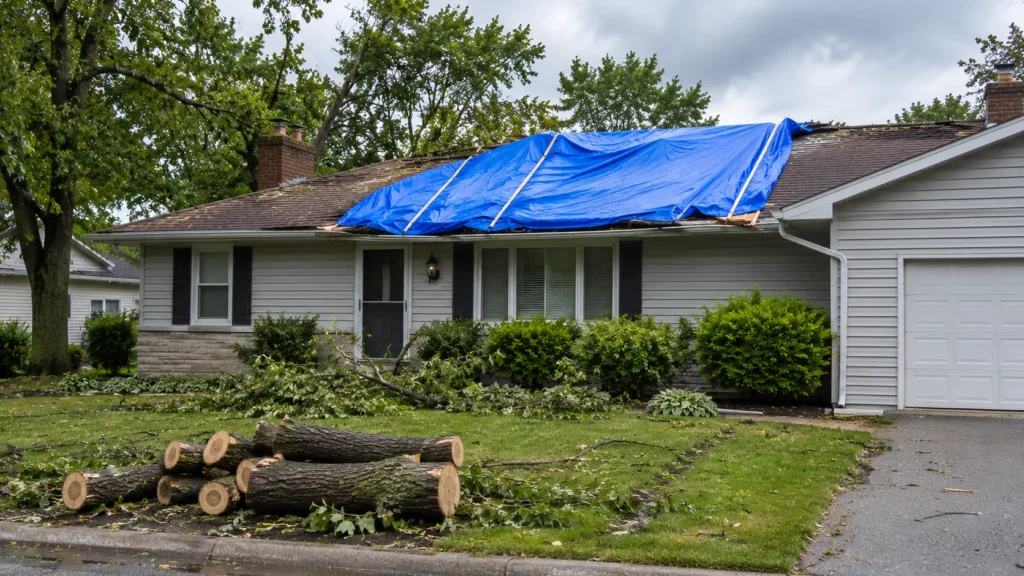
Our emergency tarping service covers damaged roof sections. If a window or door was broken by impact, board-up after impact closes the opening. Temporary cover is a stopgap, not a repair, and it should go on before the next rain, not after.
What Storm Debris Removal Peoria IL Properties Actually Involves
Storm debris removal Peoria IL jobs usually include more than branches. A typical property after a strong wind event can have:
- Tree limbs and trunk sections on the lawn, driveway, or roof
- Shingles, siding, and gutter pieces
- Broken glass and sharp metal
- Wet drywall, insulation, or ceiling material from inside the house
Sorting matters. Yard debris, roofing material, and wet building materials are handled differently, and wet interior material should not sit in the house. Our debris removal after storms service clears the property so repairs can start. For larger cleanups, our emergency storm cleanup page covers the wider scope.
Be cautious with unsolicited crews who knock on doors after a storm. Ask any company for proof of insurance and references before you agree to work, and get the scope in writing.
When the Tree Opens the Roof: Water Damage Inside
A tree through the roof almost always means water inside. Water travels along rafters, soaks attic insulation, and shows up later as ceiling stains. Our roof leak water damage guide explains how far that water can travel before you see it. The roofing repair and the interior drying are separate jobs, and the drying should not wait for the roof.
Insurance: What to Ask Before the Tree Comes Off
Whether your policy pays for tree removal, and how much it pays for debris removal, depends on the policy. Some policies set separate limits. For any storm debris removal Peoria IL claim, ask your insurer before work begins:
- Does the policy cover removal of a tree that damaged the house?
- Is there a separate limit for debris removal?
- Do you need to inspect before the tree is moved?
- How is damage handled when the tree came from a neighbor’s property?
Our article on home insurance and water restoration covers how water damage claims generally work.
Peoria Storm Season and Larger Lots
Central Illinois gets strong thunderstorm winds in spring and summer, and older neighborhoods and larger lots often have mature trees close to the house. That raises the chance of fallen tree damage Peoria IL homeowners deal with after strong winds, though any property near trees can be affected. Properties in areas like Hanna City, with more trees and outbuildings, can have damage beyond the main house, so check garages, sheds, and fences when you document.
Final Thought – Storm Debris Removal Peoria IL Starts With a Safe Assessment
Storm debris removal Peoria IL homeowners can count on starts with safety, documentation, and stopping water entry, in that order. The tree comes off when someone has a plan for it. If a storm has just hit your property, call (309) 549-1827. Our team is available 24/7 and can help with debris, temporary cover, and the water damage that follows.
FAQ
Who removes a tree that fell on my house?
Removing a tree from a roof is a rigging and load-control job, so call a company that does it professionally, not just a general yard crew. Before work starts, ask how they plan to control the load and confirm they carry insurance.
Does homeowners insurance cover storm debris removal?
It depends on your policy. Coverage for tree removal and debris removal varies, and some policies set separate limits. Ask your insurer before work begins, and photograph everything first.
Can I cut the tree up myself?
The CDC advises having a trained, experienced chain saw operator and keeping bystanders at least 30 feet away from anyone cutting limbs or a fallen tree. A tree on a roof or touching power lines is a job for professionals.
Should I wait for my insurance adjuster before moving debris?
Ask your insurer. Photograph the tree and damage from several angles first. If the tree must come off to prevent further damage, document it before it moves.
How soon should I tarp a roof after a tree hits it?
As soon as it is safe to do so, and before the next rain. Water entry is what turns a debris problem into a water damage problem.
Does storm debris removal include wet materials inside the house?
Often, yes. Wet drywall, insulation, and ceiling material should come out of the house instead of sitting in it. Ask what is included in the written scope.
Leave a Reply