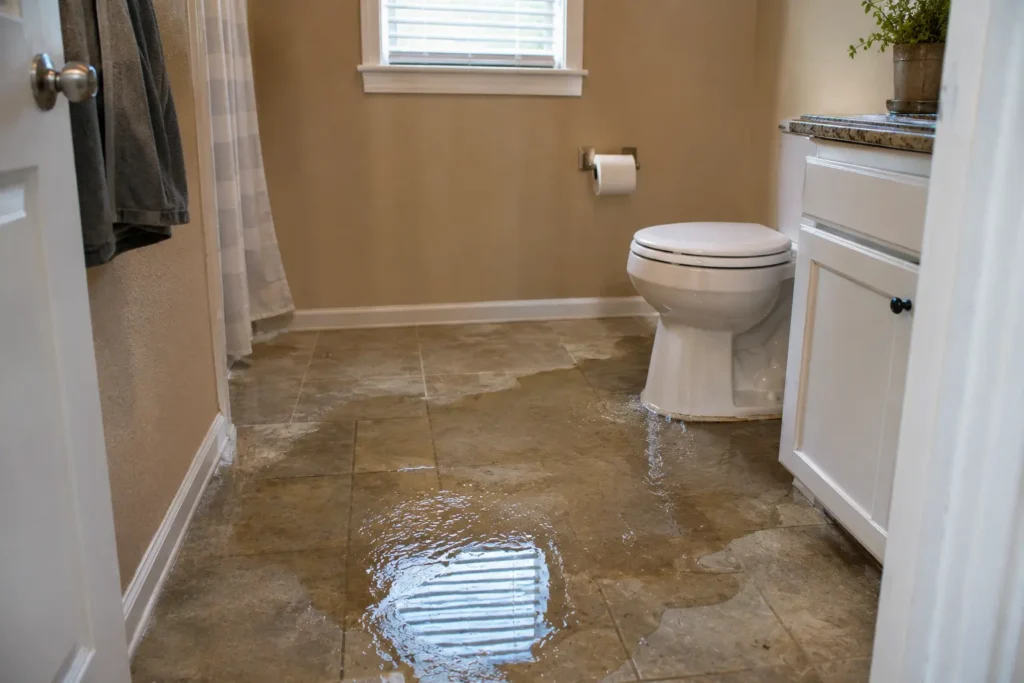
Overflow cleanup Peoria IL homeowners face often looks like a simple mop-up job until you ask one question: where did the water come from? A bathtub that ran over because the faucet was left on is a very different problem from a toilet or floor drain pushing water up from the plumbing. The towels and the mop look the same either way. The health risk and the materials that have to be thrown out do not.
This guide explains how to tell the difference, what to do in the first hour, and when an overflow stops being a cleanup job and becomes a restoration job.
The Question That Decides Everything: Where Did the Water Come From?
The restoration industry sorts water into three categories based on how contaminated the source is. Category 1 is clean supply water, Category 2 is water with significant contamination, and Category 3 is grossly contaminated, including sewage. Our guide to the three categories of water damage covers the full definitions.
The category matters because it decides what can be dried and what has to be removed. A category can also get worse: clean water that sits, or runs across dirty surfaces, can become contaminated. A professional assessment sets the category, but you can narrow it down yourself by tracing the source, which is the first step in any overflow cleanup Peoria IL job.
Toilet Overflow: Supply Water or Contamination?
A toilet overflow can be either. If the tank kept running and filled the bowl with clean supply water, the water began clean. If the bowl overflowed because of a clog, the water has been in contact with waste and should be treated as contaminated. If water came up from the drain or from beyond the toilet itself, treat it as sewage.
Clear-looking water is not proof that it is clean. Treat any toilet overflow caused by a clog as contaminated until someone qualified says otherwise. Our toilet overflow cleanup service handles the water and the affected materials.
Sink and Tub Overflows: Faucet Left On or Clogged Drain?
Sink and tub overflows have two very different causes:
- A faucet left running: the water is usually clean supply water, which makes this the easiest overflow to dry out when it is caught quickly.
- A clogged drain: the water is drain water. It has contacted the inside of the plumbing and should be treated as contaminated until it is assessed.
Overflows spread farther than they look. Water runs under cabinet bases, along baseboards, and through gaps in flooring. Our bathroom sink overflow cleanup and kitchen sink overflow cleanup services cover both rooms.
Floor Drain and Main Line Backups: Treat as Sewage
When water comes up through a floor drain, a basement shower, or several fixtures at once, the blockage is usually in the drain line, not in one fixture. That water should be treated as sewage. Our clogged drain overflow cleanup service covers the cleanup, and our sewage backup cleanup guide explains what that process involves.
Sewage cleanup is not a mop-and-bucket job. Contaminated water can soak into carpet, drywall, and insulation in ways that surface cleaning cannot reach.
The First Hour: What to Do and What Not to Do
These steps apply to most overflow cleanup Peoria IL situations, whether the water came from a fixture or a drain.
- Stop the source if you can. Shut off the supply valve behind the toilet or under the sink. For a drain backup, avoid running more water through the plumbing until the blockage is cleared.
- Keep people and pets out of the affected area. This matters most when the water may be contaminated.
- Protect yourself. The CDC’s disaster cleanup guidance says to wear rubber boots, rubber gloves, and goggles if sewage is involved. See the CDC guidelines for cleaning safely after a disaster.
- Photograph everything before you clean. Include the source, the water level, and the affected rooms.
- Call your insurer. Tell them what you found, including whether the water came from a fixture or from a drain.
- Call a professional if the water may be contaminated. Do not start by pulling up carpet and hauling wet material through the house.
What Gets Thrown Away and What Can Be Saved
When water is contaminated, the CDC’s guidance is to remove and discard drywall and insulation contaminated with sewage or floodwater, and to throw away anything you can’t clean or dry quickly. Its list includes mattresses, carpeting, carpet padding, rugs, and upholstered furniture. Hard surfaces such as flooring, concrete, countertops, and sinks can usually be cleaned thoroughly with hot water and detergent.
That guidance was written for floods, but it applies the same logic to any sewage-contaminated water. Porous materials hold contamination that cleaning cannot fully remove. Clean-water overflows are different. Carpet and drywall that stayed wet with clean supply water can often be dried if the work starts quickly, which is why the category comes first.
Overflow Water Doesn’t Stay in the Bathroom
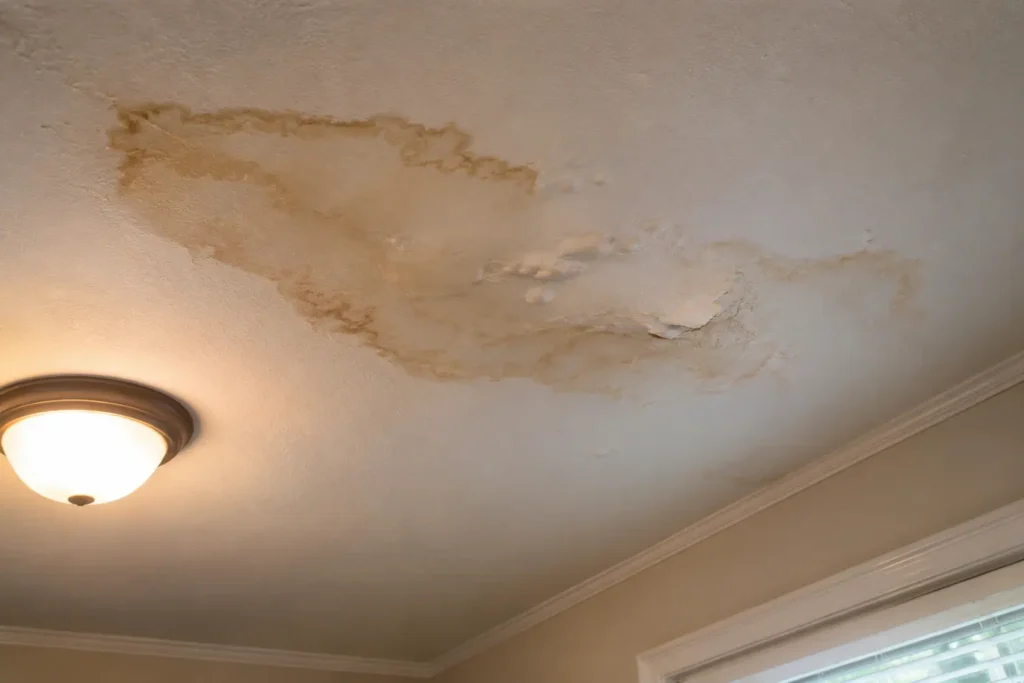
Water from an upstairs overflow rarely stops at the floor. It moves into the subfloor, along joists, and into the ceiling of the room below. A ceiling stain under a bathroom is often the first sign. Our ceiling water damage restoration service covers that damage, and it should be assessed together with the bathroom, not after it. That is why overflow cleanup Peoria IL work often involves more than one room.
Insurance: Overflow vs Backup
Many policies treat a sudden fixture overflow differently from water backing up through a drain or sewer line. Some require a separate endorsement for water backup. Ask your insurer which one applies, and tell them where the water came from. Our article on home insurance and water restoration covers the basics.
Overflow Cleanup Peoria IL: Older Homes and East Peoria
Older plumbing is generally more prone to clogs and slow drains, so homes with aging lines see more drain-related overflows. Our service areas include communities such as East Peoria, and the same rule applies everywhere: find the source before you decide how to clean.
Final Thought – Overflow Cleanup Peoria IL Starts With Finding the Source
Overflow cleanup Peoria IL jobs run smoothly when the source is identified early. Clean supply water can often be dried. Drain water and sewage have to be treated as contaminated, and the materials they touched often have to go. If you are not sure which one you have, call (309) 549-1827. Our team is available 24/7 and can help you work out what you are dealing with.
FAQ
Is toilet overflow water always sewage?
No. If the overflow was only clean supply water, such as a tank that kept running, it began clean. If the toilet overflowed because of a clog, or water came up from a drain, treat it as contaminated. Clear-looking water is not proof that it is clean.
Can I clean up a toilet overflow myself?
Small overflows of clean water can often be handled by drying the area quickly. If the water may be contaminated, the CDC advises rubber boots, rubber gloves, and goggles, and discarding porous materials that cannot be cleaned or dried quickly. A larger or contaminated overflow is a job for professionals.
How do I know if overflow water is clean or contaminated?
Trace the source. A faucet left running or a supply line leak is usually clean supply water. A clogged drain, a toilet overflow from a clog, or water coming up from a floor drain should be treated as contaminated until assessed. The category can also change if clean water sits or crosses dirty surfaces.
Does insurance cover a toilet or sink overflow?
It depends on your policy. Many policies treat a sudden fixture overflow differently from water backing up through a drain or sewer line, and some require a separate water backup endorsement. Ask your insurer and tell them where the water came from.
Can an overflow damage the ceiling below?
Yes. Water from an upstairs bathroom can travel through the subfloor and joists into the ceiling of the room below. A stain on that ceiling is a sign the bathroom floor and ceiling assembly should be assessed together.
How soon should I call after an overflow?
As soon as it is safe to do so. The CDC advises cleaning up and drying within 24 to 48 hours if possible to prevent mold, and contaminated materials should not sit in the house.
Leave a Reply