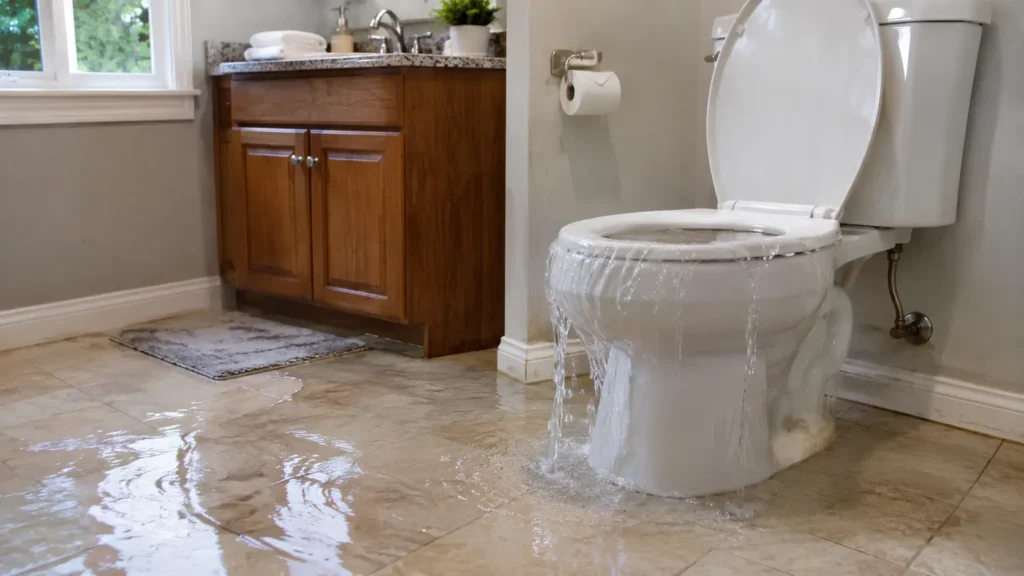
Toilet Overflow Cleanup Peoria IL is important when water spreads across bathroom flooring, walls, or nearby areas. However, not every toilet overflow involves the same level of contamination. Understanding whether the water is clean, gray water, or sewage helps homeowners determine the right cleanup approach.
The biggest question is where the water came from.
A broken toilet tank may release clean water, while an overflowing toilet bowl containing waste or a sewer backup can introduce harmful contaminants into your home.
For homeowners needing toilet overflow cleanup in Peoria IL, understanding the difference helps determine whether basic cleanup is enough or professional water damage restoration is necessary.
1. Toilet Overflow: Clean Water or Sewage?
Not every toilet overflow is considered contaminated. It depends on which part of the toilet failed.
When toilet overflow involves clean water:
- A cracked toilet tank releases water.
- A damaged water supply connection leaks.
- A faulty tank connection allows water to escape.
This water may initially fall under Category 1 (clean water), provided it has not contacted contaminated surfaces.
When toilet overflow involves contamination:
- Toilet bowl water containing feces spills onto the floor.
- Wastewater returns through a blocked toilet drain.
- Sewage backs up through connected plumbing.
These situations can involve Category 2 or Category 3 water, depending on the contamination.
If sewage or wastewater is involved, avoid direct contact and arrange appropriate professional cleanup.
2. Bathroom Sink and Kitchen Sink Overflow
Sink overflows can happen when faucets are left running, drains become blocked, or plumbing connections fail.
However, the water source makes a significant difference.
Bathroom sink overflow: Water from a clean faucet may initially be Category 1. But wastewater returning through a blocked drain may contain soap residue, organic debris, and other contaminants.
Kitchen sink overflow: Grease, food particles, and cooking waste can collect inside drainage pipes. When wastewater backs up through the drain, it should not be treated like an ordinary clean-water spill.
Common causes include:
- Grease and food buildup.
- Clogged garbage disposals.
- Blocked drainage connections.
- Damaged pipes beneath sinks.
If the problem involves a plumbing failure, professional plumbing overflow cleanup in Peoria may be necessary to address the resulting property damage.
3. Floor Drain Overflow: A Possible Sewage Warning
When water comes out of a basement floor drain instead of flowing into it, there may be a blockage in the drainage system.
Watch for these warning signs:
- Water bubbling from a basement floor drain.
- Multiple drains backing up together.
- Toilet water rising when another fixture is used.
- Wastewater appearing on basement flooring.
- Persistent sewage odors.
These symptoms can indicate a shared drainage blockage or sewer backup.
Stop using connected plumbing fixtures and contact a qualified plumber to investigate the source.
If sewage has entered the property, professional sewage backup cleanup is important because contaminated water can affect flooring, drywall, and other porous materials.
4. Clean Water vs. Gray Water vs. Black Water
Water damage professionals generally use three categories to describe contamination levels.
| Category | Example | Risk |
|---|---|---|
| Category 1 – Clean Water | Broken toilet tank or clean faucet supply line | Lower initial contamination risk |
| Category 2 – Gray Water | Contaminated wastewater without gross sewage contamination | Potential health risk |
| Category 3 – Black Water | Sewage or toilet overflow containing feces | Serious contamination risk |
Water can also become more contaminated after contacting dirty surfaces or building materials.
Therefore, appearance alone cannot determine whether overflow water is safe.
5. What Should You Do After a Toilet or Drain Overflow?
Taking the right initial steps can help prevent additional damage.
Step 1: Stop the water source. Turn off the affected fixture’s water supply if it is safe to access.
Step 2: Avoid using connected plumbing. If multiple drains are backing up, stop using toilets, sinks, and other connected fixtures.
Step 3: Keep people and pets away. Never walk through suspected sewage water without appropriate protective equipment.
Step 4: Avoid electrical hazards. Do not enter standing water near electrical outlets, appliances, or exposed wiring.
Step 5: Document the damage. Take photographs of affected flooring, walls, cabinets, and belongings from a safe location.
Step 6: Arrange professional assessment. If water has entered walls, flooring, or contaminated materials, professional restoration may be necessary.
For additional safety information, read the CDC’s guidance on septic systems and wastewater safety.
6. Professional Plumbing Overflow Cleanup Peoria IL
Professional restoration involves more than removing visible water.
Depending on the contamination and damage, the process may include:
- Inspection: Identifying the water source and affected areas.
- Water extraction: Removing standing water with suitable equipment.
- Cleaning and disinfection: Treating affected surfaces using appropriate procedures.
- Structural drying: Using air movers and commercial dehumidifiers to address trapped moisture.
- Material removal: Removing porous materials that cannot be safely restored.
- Final restoration: Repairing affected drywall, flooring, and other building materials where necessary.
Moisture can spread beneath bathroom flooring, inside cabinets, and behind walls. That is why checking concealed areas is important.
Professional mold remediation services may also be needed if mold develops following unresolved moisture damage.
7. When Should You Call a Restoration Professional?
Not every small faucet spill requires professional restoration. However, professional assessment is advisable when:
- A toilet overflows with sewage or fecal matter.
- A basement floor drain releases wastewater.
- Multiple plumbing fixtures back up simultaneously.
- Water reaches carpet, drywall, or insulation.
- Standing water spreads across multiple rooms.
- Hidden moisture or persistent sewage odors remain.
A plumber handles the underlying plumbing problem, while a restoration professional addresses the resulting water damage and contamination. Both may be needed.
Frequently Asked Questions
1. Is toilet overflow water always contaminated?
No. Water from a broken toilet tank may initially be clean water. However, toilet bowl overflow containing waste or sewage backup can present serious contamination risks.
2. Is bathroom sink overflow considered clean water?
Not always. Water from a clean faucet may initially be Category 1, while wastewater returning through a blocked drain may be contaminated.
3. What should I do if sewage comes out of my basement drain?
Stop using connected plumbing fixtures, keep children and pets away, avoid direct contact, and contact a plumber and professional restoration company.
4. Can toilet overflow damage flooring and drywall?
Yes. Water can enter flooring, baseboards, subfloors, drywall, and insulation. Contaminated porous materials may require removal rather than ordinary cleaning.
5. Does homeowners insurance cover toilet overflow cleanup?
Coverage depends on the cause of the damage and your individual insurance policy. Check your policy and contact your insurance provider before assuming coverage.
Need Toilet or Drain Overflow Cleanup in Peoria IL?
A toilet overflow, blocked kitchen sink, or backed-up floor drain can cause more damage than what is visible on the surface.
Water Damage Restoration Peoria provides plumbing overflow cleanup and water damage restoration services in Peoria, IL.
If you are dealing with contaminated water, standing water, or moisture spreading into flooring and walls, getting the problem assessed is an important first step.
Need help with plumbing overflow cleanup?
Call Water Damage Restoration Peoria at (309) 549-1827 to discuss your water damage situation.
Do not delay professional assessment when sewage or contaminated water is involved.
Leave a Reply