
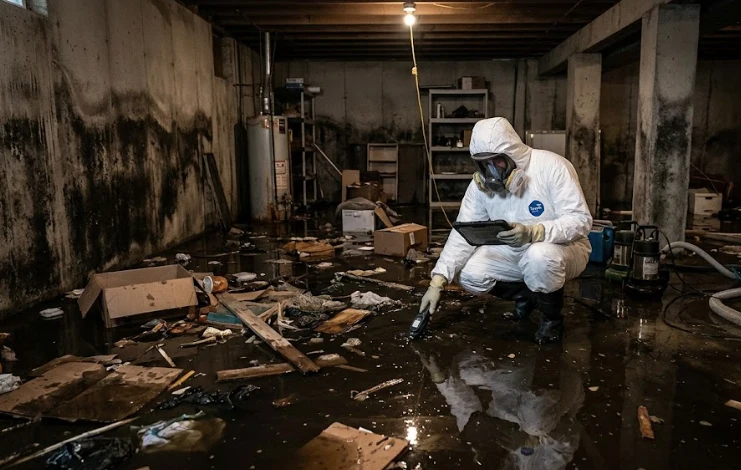
Sewage backup cleanup Peoria IL homeowners deal with every year and it’s one of the most urgent, and most mishandled, water damage situations a home can face. Unlike a burst pipe or a leaky appliance, sewage backup is not a situation where waiting a few hours to assess the damage is a reasonable option. The water involved is contaminated, the health risk is immediate, and every hour it sits, it spreads further into flooring, walls, and structural materials.
This guide covers what sewage backup actually is, why it’s categorized differently from standard water damage, and what proper cleanup looks like from the moment you discover it.
Why Sewage Backup Is More Dangerous Than Regular Water Damage
Not all water damage is the same. The water damage restoration industry classifies water intrusion into three categories based on contamination level, and sewage backup falls into category 3, the most serious classification.
Category 3 water, also called black water, contains bacteria, viruses, fungi, and in many cases raw sewage solids. Any porous material this water contacts drywall, carpet, insulation, wood framing, concrete block is considered contaminated, not just wet. This changes the entire cleanup approach compared to a clean water pipe burst.
The EPA’s guidelines on flood and sewage cleanup clearly state that sewage-contaminated materials that cannot be thoroughly cleaned and dried should be removed and disposed of rather than dried in place. This is why sewage backup cleanup costs more and takes longer than standard water damage cleanup the scope of material removal is significantly larger.
“In Peoria, sewage backup cleanup Peoria IL restoration teams see this pattern repeat every spring – aging sewer infrastructure combined with Illinois River flooding creates category 3 water situations in basements across the city.”
What Causes Sewage Backups in Peoria IL Homes
Understanding what causes sewage backup cleanup Peoria IL homeowners to call us helps determine both the cleanup scope and what insurance will cover. The most common causes in Peoria area homes:
- Municipal sewer overload — during heavy Illinois River flooding season and major storm events, Peoria’s combined sewer system can exceed capacity. When it does, sewage backs up through floor drains and basement fixtures. This is one of the most common causes in older Peoria neighborhoods.
- Tree root intrusion — mature trees common in established neighborhoods like West Central and North Florence send roots into clay sewer pipes, causing blockages that eventually force sewage back toward the home.
- Grease and debris buildup — partial blockages in the lateral line between the home and the main sewer accumulate over time until a backup occurs.
- Collapsed or cracked lateral lines — older cast iron or clay pipes in pre-1970s Peoria homes degrade over time and can fail entirely during ground movement or freeze-thaw cycles.
- Sump pump failure during flooding — when a sump pump fails during a heavy rain event, groundwater and sewage can enter simultaneously through the basement floor drain.
Knowing which cause is involved tells a restoration team whether the backup is likely to recur before reconstruction begins an important factor in deciding how much material to remove versus restore in place.
The Immediate Health Risk – Why You Shouldn’t Wait
Sewage backup cleanup Peoria IL situations carry immediate health risks that standard water damage events don’t, the contamination level changes everything about how you respond. Sewage water contains pathogens that cause serious illness on contact or through inhalation. The risk isn’t theoretical, it’s immediate and specific. Bacteria like E. coli and salmonella, hepatitis A, and various intestinal parasites are commonly present in sewage backup situations.
What this means practically for Peoria homeowners:
- Do not walk through sewage-contaminated areas without waterproof boots and gloves at minimum
- Do not run HVAC systems – sewage odor and airborne particles will circulate through ductwork and spread contamination to unaffected rooms
- Do not eat or drink anything that may have been near the contaminated area
- Keep children and pets out of the affected space entirely until professional cleanup is complete
The smell of sewage is not just unpleasant, it’s a signal that hydrogen sulfide and methane gases may be present in confined spaces like basements. Ventilate the area by opening windows if possible before entering for any length of time.
What Professional Sewage Backup Cleanup Actually Involves
A proper sewage backup cleanup Peoria IL job follows a specific sequence that differs from standard water damage cleanup in several important ways. Our sewage backup cleanup and sanitation service covers the full scope:
Containment first — affected areas get sealed off from the rest of the home to prevent cross-contamination. HEPA air scrubbers run continuously to capture airborne particles.
Protective equipment — full PPE including respirators, Tyvek suits, and waterproof boots for every technician entering the contaminated space. This is not optional.
Sewage extraction — the contaminated water gets extracted and disposed of according to Illinois EPA guidelines for biohazardous waste, not simply pumped into a drain.
Material removal — all porous materials that contacted sewage water get removed. This typically includes carpet and padding, drywall to at least 12 inches above the water line, insulation, and any wood framing with significant absorption. The goal is removing contamination, not saving materials.
Antimicrobial treatment — all remaining structural surfaces get treated with EPA-registered disinfectants. Multiple applications may be required depending on contamination level.
Air quality testing — post-cleanup air quality testing confirms pathogen levels have returned to normal before reconstruction begins.
This is significantly more involved than a standard flood damage cleanup job and skipping any of these steps creates ongoing health risk for the household.
Sewage Backup and Your Insurance – What’s Usually Covered
This is where many sewage backup cleanup Peoria IL homeowners run into surprises, standard policies almost never cover what you assume they do. Standard homeowner’s insurance policies typically do not cover sewage backup unless you have a specific sewer backup endorsement or rider added to your policy.
What standard policies usually cover:
- Sewage backup caused by a sudden and accidental failure of a plumbing fixture inside the home
- Water damage from an overflowing toilet if it’s a sudden event
What standard policies usually exclude:
- Backup from the municipal sewer system overloading during a storm event
- Gradual backup from tree root intrusion that built up over time
- Any backup situation classified as flooding from external sources
The EPA and FEMA both recommend homeowners in flood-prone areas like Peoria check specifically for sewer backup coverage as a separate line item on their policy, not assume it’s included. Call your insurance company before any cleanup work begins — documentation of pre-cleanup conditions is essential for claim processing, and starting work before the adjuster reviews the situation can complicate coverage.
How Long Does Sewage Backup Cleanup Take in Peoria?
Most sewage backup cleanup Peoria IL residential jobs follow this general timeline from day one through completed restoration:
- Day 1 — emergency extraction, containment setup, material removal begins
- Days 2 to 3 — remaining material removal complete, antimicrobial treatment applied, structural drying equipment placed
- Days 4 to 5 — drying phase, daily moisture readings tracked
- Day 6 onward — post-cleanup air quality testing, clearance for reconstruction
For homeowners who also experienced flooded basement cleanup alongside the sewage backup, the timeline extends because both contamination removal and structural drying need to be complete before reconstruction can begin.
Total time from discovery to completed restoration, including reconstruction, typically runs two to four weeks for a single-room basement sewage backup, and four to six weeks for events that affected multiple areas or involved significant material removal.
West Central and Older Peoria Neighborhoods – Higher Risk Areas
Sewage backup risk is not evenly distributed across Peoria. The neighborhoods with the highest incidence of sewage backup calls are older areas with clay or cast iron sewer laterals that were installed decades ago and haven’t been replaced.
In West Central, many homes were built in the 1940s through 1960s with clay pipe laterals that are now at or beyond their useful life. Combined with the neighborhood’s position close to the Illinois River, where groundwater pressure during spring flooding pushes against already compromised sewer infrastructure, sewage backup events are most common during the March through June flooding season.
If you’re in West Central, East Bluff, Bartonville, or any other established Peoria neighborhood with pre-1970s construction, having your sewer lateral inspected with a camera scope is one of the most practical preventive steps you can take before the next flooding season.
Final Thought – Sewage Backup Is Not a DIY Situation
For most minor water damage events, a small appliance overflow, a contained pipe drip experienced homeowners can manage initial steps before professionals arrive. Sewage backup is not in that category. The contamination level, the required disposal protocols, and the health risk involved make it a situation where professional response from the first moment is the right call, not a backup plan.
If you need sewage backup cleanup Peoria IL service right now, call (309) 549-1827. Our team is available 24 hours a day, seven days a week, and we arrive in full protective equipment ready to begin containment and extraction immediately. For guidance on the first steps to take after any water damage event, our flood cleanup first 24 hours guide covers what matters most before professional help arrives.
Leave a Reply