
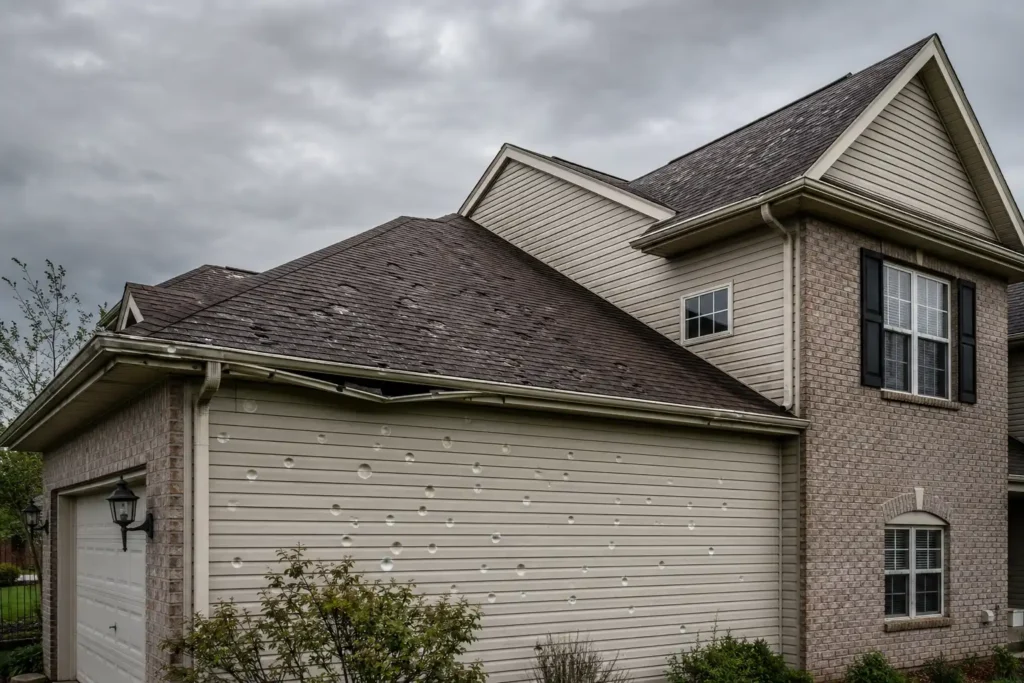
Hail damage repair Peoria IL homeowners need after a major storm is one of the most misunderstood categories of home repair – not because the damage is hard to fix, but because so much of it is invisible from the ground. A hailstorm that sounds dramatic from inside the house can leave damage that takes months to fully show up as interior water stains, while a quieter storm with larger stones can punch through roofing materials in ways that compromise the entire water resistance of the roof overnight.
This guide covers what hail actually does to a Peoria home, how to assess the damage after a storm, and why the connection between roof hail damage and interior water intrusion matters more than most homeowners realize.
Why Peoria IL Gets More Hail Than Most Midwest Cities
Peoria sits in a geographic corridor that experiences some of the most active hail-producing thunderstorm activity in Illinois. The convergence of Gulf moisture moving north with cold fronts dropping from the Great Lakes creates the atmospheric instability that generates large hailstones – particularly during May and June, which are peak hail months for central Illinois.
Hail events that produce stones larger than one inch in diameter, about the size of a quarter – are what cause the visible impact damage to roofing, siding, and gutters that most Peoria homeowners recognize. But hail as small as three-quarters of an inch can compromise roofing materials in ways that don’t show visible surface damage while still breaking down the granule layer that protects asphalt shingles from UV degradation and water penetration.
The result is a category of damage that often looks minor or even undetectable from the ground but creates a compromised roof surface that fails progressively over the following months, usually showing up first as interior ceiling stains during the next heavy rain.
What Hail Does to Your Roof – The Real Damage Progression
Understanding what hail actually does to roofing materials helps explain why hail damage repair in Peoria IL needs to happen faster than many homeowners prioritize it.
Asphalt shingles – the most common damage type:
Hail impact on asphalt shingles creates what’s called a “bruise”, a soft spot where the impact has broken the bond between the granule layer and the fiberglass mat beneath. From the ground, this looks like a dark circular spot or, in severe cases, an actual hole or crack. What’s happening underneath is that the waterproofing layer of the shingle has been compromised, and water now has a path through the roofing material at every impact point.
Gutters and downspouts:
Aluminum gutters show hail damage clearly, circular dents from each stone impact are visible along the top and sides. While dented gutters still function, the impact often compromises the gutter’s attachment to the fascia board, and the same storm that dented the gutters has usually also left fascia damage that accelerates rot if not addressed.
Siding:
Vinyl siding cracks on impact from larger stones. Fiber cement siding shows impact marks without always cracking. Both types of siding damage create entry points for water infiltration at the wall assembly level, particularly at the seams and corners where impact damage is hardest to visually detect.
Windows and skylights:
Hail impact on window frames and screens is usually visible and obvious. What’s less obvious is impact damage to the caulking seals around window frames, which creates slow water intrusion paths that don’t show up until interior moisture levels have already elevated significantly.
The Connection Between Roof Hail Damage and Interior Water Intrusion
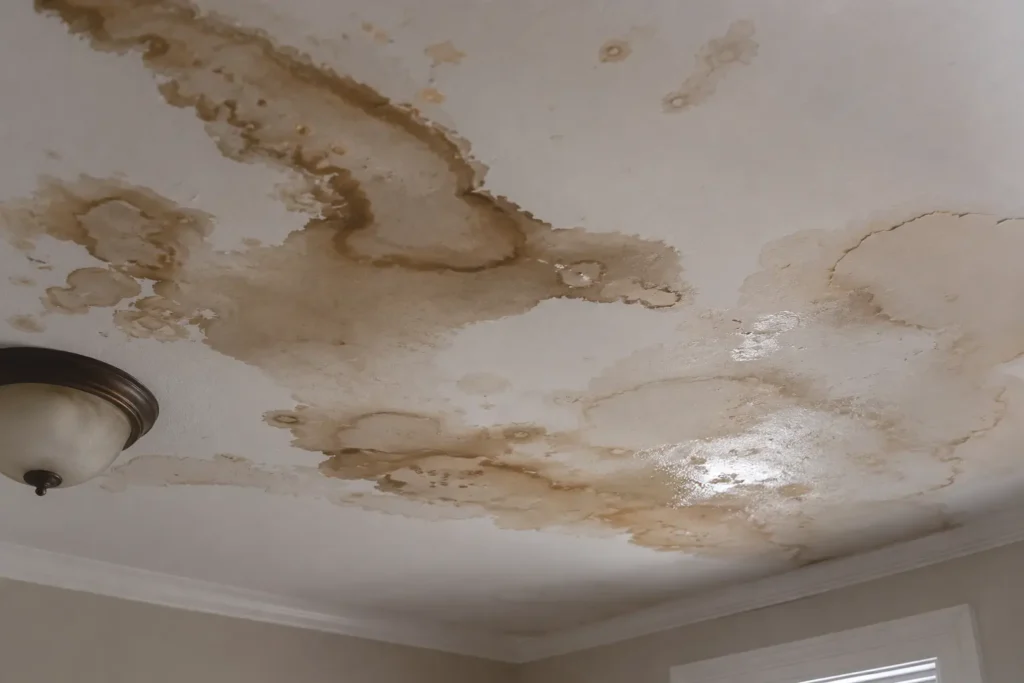
This is the part of hail damage that causes the most expensive secondary problems for Peoria homeowners. Roof damage from hail creates compromised areas that don’t fail immediately – they fail progressively over subsequent rain events.
A hailstorm in May that damages shingle granules across a significant portion of the roof doesn’t cause interior leaking that day. The roof still sheds most of the rain during the storm itself. But over the following weeks and months, every rain event moves water through those compromised areas slightly faster. By late summer, a typical rain event produces ceiling staining. By fall, that staining has become active dripping.
At that point, the interior damage from water intrusion – wet insulation, saturated ceiling drywall, potential mold growth in the attic – has often already been developing for two to three months. The roof repair cost is the same whether you address it in June or September. The water damage restoration cost is not.
For Peoria homeowners who have noticed ceiling staining after a rain event following a hailstorm earlier in the season, our flood damage cleanup process starts with attic moisture assessment before any interior work begins, because the source of interior water intrusion needs to be confirmed and addressed before drying and restoration can be effective.
How to Assess Hail Damage After a Storm in Peoria IL
A proper hail damage assessment after a storm covers the exterior from ground level first, then from roof level with appropriate safety precautions.
From the ground – what to look for:
- Circular dents in aluminum gutters, downspouts, and AC condenser fins – these are the clearest indicators of hail size and storm intensity
- Dark spots or missing granule areas on roof shingles visible from a safe vantage point
- Cracked or split vinyl siding, particularly on west and southwest facing walls
- Damaged window screens – screen mesh tears easily from hail and is a reliable impact indicator
- Dents in any soft metal on the exterior – flashing, vents, chimney caps
What not to do:
Don’t get on the roof immediately after a hailstorm without confirming it’s structurally sound. Hail-damaged shingles are more slippery than undamaged ones, and impact damage to roof decking in severe events can compromise the structural integrity of the surface.
According to FEMA’s guidelines on storm damage assessment, homeowners should document all visible exterior damage with photos before any cleanup or temporary repairs begin – this documentation is essential for insurance claims and for establishing the pre-repair condition.
Hail Damage and Insurance Claims in Peoria IL
Hail damage claims are among the most common property insurance claims in Illinois, and they’re also among the most frequently disputed – particularly when homeowners file claims weeks or months after the storm event rather than within the standard notification window most policies require.
Illinois homeowner’s insurance policies generally cover hail damage to roofing, siding, gutters, and windows as a covered peril under the dwelling coverage section. What determines the payout is the deductible type – a standard dollar-amount deductible versus a percentage-based wind and hail deductible, which some Illinois policies switched to after major hail seasons in recent years.
The practical difference: a $1,000 standard deductible on a $12,000 roof replacement means $11,000 from insurance. A 2% wind and hail deductible on a $300,000 home means a $6,000 deductible on the same claim. Knowing which type your policy uses before a storm happens is the kind of information that prevents surprises when you need it most.
Secondary Water Damage After Hail – When to Call a Restoration Team
Hail damage that has progressed to interior water intrusion is where roofing repair and water damage restoration overlap. The roof repair stops the active entry point. The restoration work addresses what the water intrusion has already done to the interior.
Common scenarios where water damage restoration follows hail damage repair in Peoria homes:
- Attic insulation that absorbed moisture from roof penetration points before the leak was visible inside
- Ceiling drywall that has become saturated from repeated rain intrusion over multiple months
- Wall cavities where water tracked from the ceiling plane downward
- Basement flooding from compromised gutter systems that directed water against the foundation rather than away from it
For the last scenario specifically, a hail-damaged gutter system that redirects water against the foundation is a direct path to flooded basement cleanup situations – particularly in older Peoria neighborhoods where block foundations absorb groundwater pressure readily.
Dunlap and Surrounding Peoria County Areas – Hail Risk and Home Types
Hail damage patterns across Peoria County are not uniform. Newer subdivisions in communities like Dunlap tend to have more recent roofing materials – architectural shingles with better impact resistance ratings – that hold up better in moderate hail events. Older neighborhoods closer to the Illinois River, with three-tab asphalt shingles that are 15 to 20 years old, show significantly more damage from the same hailstorm because aged shingles have less granule coverage to absorb impact energy.
This means two homes hit by the same hailstorm can have dramatically different damage profiles depending on roof age, material type, and installation quality. A post-storm roof inspection is the only way to know which category your home falls into after a major hail event.
Final Thought – Hail Damage Gets More Expensive the Longer It Waits
The cost of hail damage repair in Peoria IL is determined largely by what happened between the storm and when the repair started. A roof addressed within a few weeks of a hailstorm typically involves shingle replacement and minor flashing work. The same roof addressed six months later, after interior water intrusion has been occurring through multiple rain events, adds attic insulation replacement, ceiling drywall repair, and in some cases mold remediation to the scope.
For homeowners who experienced a hailstorm recently and noticed any of the indicators described in this post, our storm damage repair guide covers the full assessment and response process in detail.
For hail damage repair Peoria IL response right now, call (309) 549-1827 – available 24 hours a day, seven days a week, with same-day assessment across Peoria and surrounding Peoria County communities.
Leave a Reply