
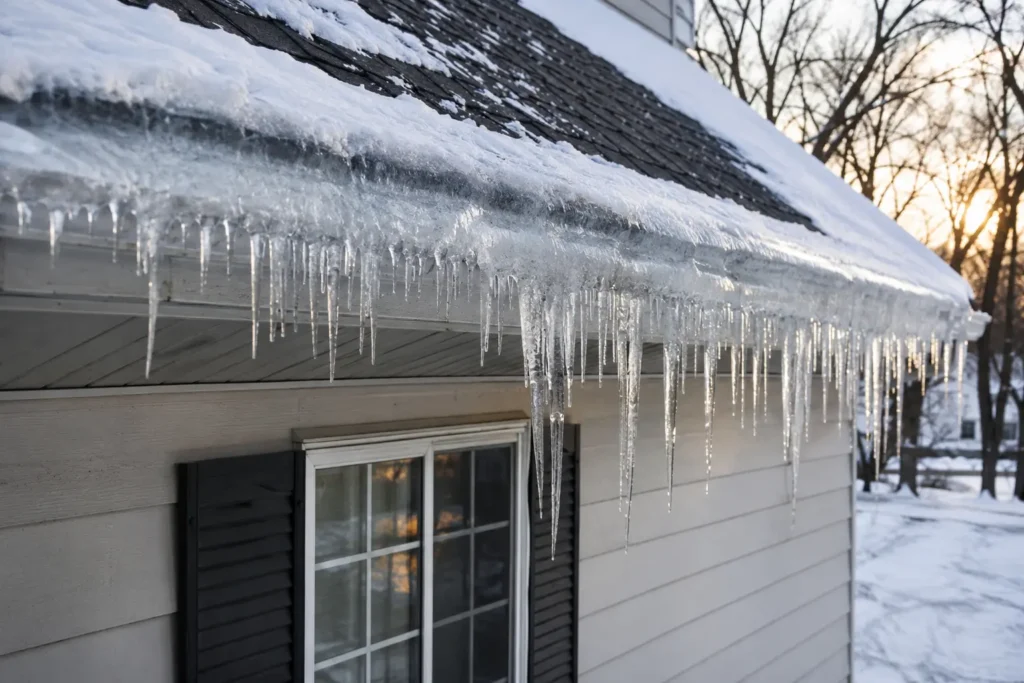
Ice dam water damage Peoria IL homeowners deal with each winter usually starts the same way. A few days of snow, a mild afternoon, a hard freeze overnight, and a ridge of ice forms along the roof edge. The ice looks like a cosmetic problem. The damage happens behind it, where meltwater has nowhere to go and starts working its way under the shingles.
This guide explains why ice dams form on Peoria homes, where the water goes once it gets inside, and what to do before the next freeze and thaw cycle.
What an Ice Dam Is and Why It Forms
An ice dam is a ridge of ice that builds up along the lower edge of a roof and blocks melting snow from draining off. Snow on the upper roof melts, runs down to the eaves, and refreezes there.
The usual cause is heat escaping from the living space into the attic. That heat warms the underside of the roof deck, so the snow melts from below. The eaves stay colder because they extend past the heated walls, and that is where the meltwater refreezes. Massachusetts state guidance on ice dams describes the same pattern: most ice dams form when heat loss into the attic warms the roof from underneath.
Three things have to line up: snow on the roof, heat coming up from below, and cold air at the eaves. Central Illinois winters swing above and below freezing often enough to repeat that cycle several times a season, and each cycle can add to the ice.
Where the Water Goes After an Ice Dam Forms
Once the dam is in place, melting snow pools behind it. That water has only one direction left to go: up and under the shingles, through nail holes and seams, and onto the roof deck. From there it follows a predictable path.
- Roof sheathing: the plywood or OSB under the shingles absorbs water and starts to break down at the entry point.
- Attic insulation: wet insulation compresses and holds water against rafters and framing. It also stops insulating well, which sends more heat into the attic and feeds the next ice dam.
- Exterior wall cavities: water can run down inside the top of the wall and wet the insulation there, often with no visible sign for a long time.
- Ceilings along exterior walls: stains and paint bubbles usually show up where the ceiling meets the outside wall, because that is where the water finishes its path.
This is why ice dam water damage Peoria IL homeowners find on a ceiling is rarely the whole story. By the time a stain appears, the attic and wall materials above it have been wet for a while. Our roof leak water damage guide walks through the same water travel path for ordinary roof leaks.
Signs of Ice Dam Damage – and Why It Often Shows Up During the Thaw
Ice can seal a leak while it stays frozen. The water often only reaches the inside of the house once temperatures rise and the ice melts, so the first sign of ice dam water damage Peoria IL homes show can arrive on a mild day after a cold stretch. Watch for:
- Thick ice ridges or large icicles along the eaves and gutters
- Brown or yellow stains on ceilings next to exterior walls
- Paint bubbling or peeling near the top of walls
- Damp, flattened, or discolored attic insulation
- A musty smell in upstairs rooms after a thaw
Our guide to hidden water damage signs in Peoria homes covers other indicators that show up before a stain does.
What to Do Right Away
Ice dam water damage Peoria IL homeowners face is a safety problem as well as a water problem, so the first steps are about keeping people safe and limiting damage.
- Stay off the roof and away from the ice. Falling ice and slick surfaces cause injuries. Don’t chip at ice with axes, hammers, or picks, which can also tear up shingles.
- Protect the interior. Move belongings out from under stained ceilings. If a ceiling is bulging or sagging, keep people out from under it and call a professional.
- Document everything. Photograph the ice, the stains, and any damaged items before cleanup begins.
- Contact your insurer. Coverage depends on your policy, so ask what is covered and what they need from you. Our article on whether home insurance covers water restoration explains the basics.
- Call for help early. An ice dam leak handled in the first days is a much smaller job than one that sits wet all winter.
Our ice dam removal and repair service handles the dam itself and the damage behind it.
How Professional Ice Dam Water Damage Peoria IL Cleanup Works
Fixing the ceiling stain is the last step, not the first. A proper job works from the roof down:
- Stop the water. Temporary coverage over the damaged area, followed by repair, through our roof leak repair and water damage mitigation service.
- Map the moisture. Moisture meters and thermal imaging show how far the water traveled through the attic, the ceiling, and the tops of the exterior walls.
- Remove what won’t dry. Saturated insulation usually has to be replaced. Our wet insulation removal and replacement service covers that step.
- Dry the structure. Drying equipment goes in based on the moisture map, and readings are checked until the materials are dry. Our structural drying guide explains how that works in Peoria’s climate.
- Check for mold, then repair. Wet attic materials in cold weather dry slowly, so mold is worth ruling out before drywall goes back up. Our ceiling water damage restoration and attic damage restoration services cover the repair side.
Fixing the Cause – Why Ice Dams Come Back
Water damage restoration deals with what the ice dam did. It does not fix why the ice dam formed. If heat keeps leaking into the attic, ice dam water damage Peoria IL homes experience this winter tends to repeat next winter.
The long-term fix is controlling that heat loss: sealing the air leaks between the living space and the attic, adding insulation where it is thin, and making sure attic airflow works as designed. The Massachusetts guidance linked above recommends starting with a home energy assessment to find those air leaks. An insulation or weatherization contractor typically handles that work, and it makes sense to schedule it before the next freeze.
Older neighborhoods such as Peoria Heights, where many homes were built before modern insulation standards, are more likely to have gaps around chimneys, light fixtures, and attic hatches that let warm air through. That raises the risk of ice dam water damage Peoria IL homeowners see in older housing, though any home with attic heat loss can develop it. The same cold snap can also freeze plumbing, so see our frozen pipe burst cleanup guide for that side of winter.
Final Thought – Ice Dam Water Damage Peoria IL Is Cheaper to Catch Early
Ice dam water damage Peoria IL homeowners find in spring is almost always larger than what they would have found in January. Wet insulation sits through the cold months, and the damage spreads quietly. Catching it during the first thaw keeps it a small job.
If you see ice ridges, ceiling stains, or damp insulation, call (309) 549-1827. Our team is available 24/7 and can look at the roof edge, attic, and ceiling together.
FAQ
What causes ice dams on Peoria homes?
Heat escaping into the attic melts snow on the roof from underneath. The meltwater runs to the cold eaves and refreezes, building a ridge of ice that blocks further drainage. Air leaks, thin insulation, and poor attic airflow are the most common reasons the roof gets warm enough to start the cycle.
Does homeowners insurance cover ice dam damage?
It depends on your policy. Many policies treat sudden water damage differently from long-term seepage, and that difference matters for any ice dam water damage Peoria IL claim. Read your policy, document the damage with photos, and ask your insurer directly what is covered before cleanup begins.
Can I remove an ice dam myself?
Climbing onto an icy roof or chipping at the ice is risky and can damage shingles. Clearing snow from the lower roof with a roof rake while standing on the ground is a safer step. For an active leak or a thick dam, professional help is the safer route.
How do I know if ice dam water got into my walls?
Stains near the top of exterior walls, bubbling paint, and damp insulation are signs, but wall cavities can be wet without any visible sign. Moisture meters and thermal imaging show the true extent without opening every wall.
Can an ice dam leak cause mold?
Yes, if wet materials stay wet. Cold attics dry slowly, so insulation and framing that got wet during winter can stay damp for weeks. Drying the area and checking for mold before closing up walls and ceilings is the safe approach.
How do I stop ice dams from coming back?
Fix the heat loss that causes them: seal attic air leaks, improve insulation, and confirm attic ventilation works. Keeping gutters clear helps water drain but does not address the root cause.
Leave a Reply